Puppy Socialization: 20 Safe Introductions to Work Through
Affiliate disclosure. This page contains an affiliate link to the K9 Training Institute free workshop. If you sign up through it we may earn a commission, at no extra cost to you. We only link to training that is force-free, and we were not paid to write this guide.
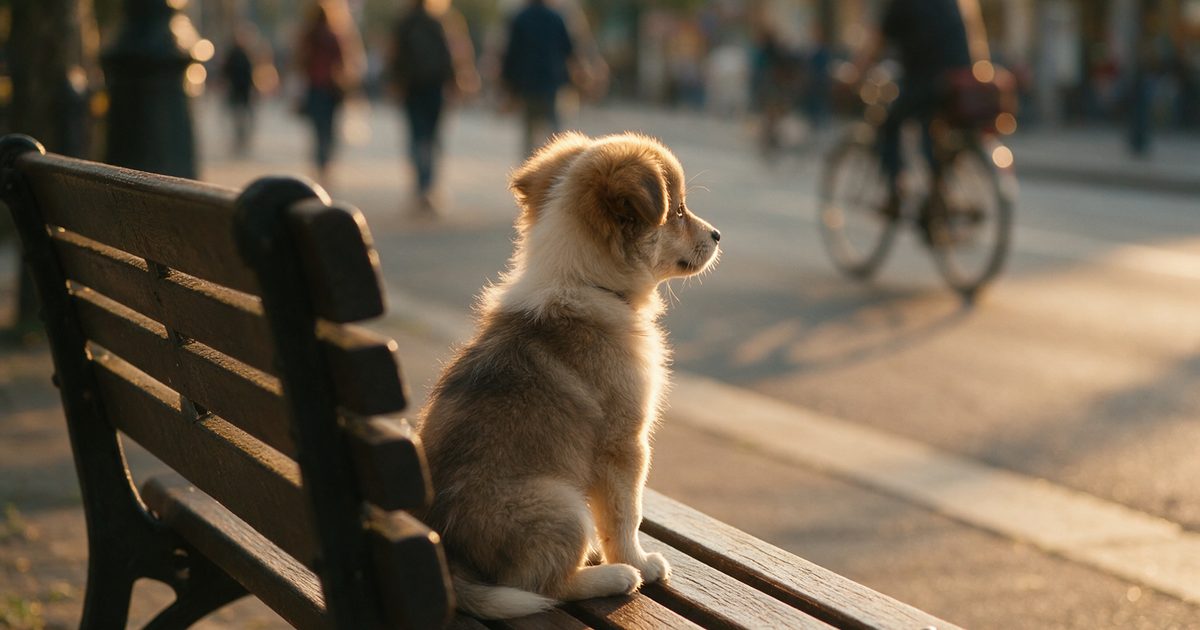
Puppy socialization is the part of raising a dog that people most often get backwards. It sounds like it means introducing your puppy to as many people, dogs and places as possible, as fast as possible. It does not. It means teaching your puppy that new things are boring — that a skateboard, a beard, a garbage truck and a vacuum cleaner are all part of the furniture. A puppy who has calmly watched twenty things from a comfortable distance is in far better shape than one who was passed around forty strangers at a party.
This list is twenty introductions worth working through, grouped by type. Take them slowly, one or two at a time.
Before you start
Two rules run through everything below.
Distance is your dial. Almost anything is fine from far enough away. If your puppy stares, freezes, backs off or will not take a treat they would normally eat, you are too close. Move away until they are relaxed, and let that be the win. Nothing on this list needs to be finished today.
Let your puppy choose. Approaching is the puppy’s decision, not the other party’s. That means asking people to crouch sideways and wait rather than reaching over, and it means never carrying your puppy into something they backed away from.
One practical point on timing: there is a genuine tension between the weeks when puppies accept new things most easily and the weeks before vaccinations are complete. That trade-off depends on your puppy and where you live, and it is a conversation for your vet, not for an article. Ask them. Most of what follows can happen at home or in your own yard either way.
People — 5 introductions
Puppies generalise badly. A puppy who has only met your household learns that adults who look like you are safe, and nothing else.
- Someone in a hat and a hood. Headgear changes a human silhouette completely.
- Someone with a beard or glasses. Faces that do not look like the ones at home.
- A child, at a distance first. Children move fast and sound different. Start with watching, not touching, and keep any greeting brief and supervised.
- Someone using a stick, crutches or a wheelchair. Unusual movement and equipment.
- A person in high-vis or uniform. The delivery driver is the single most predictable stranger your dog will bark at for the next decade.
Surfaces and places — 5 introductions
Feet matter more than people expect. A dog who has only walked on carpet and grass will balk at a metal grate for years.
- A metal grate or drain cover.
- A wobbly or hollow surface — a low ramp, a sheet of plywood, a doormat over a step.
- Wet grass and a puddle.
- Stairs, up and down, on a lead. Short ones. Down is harder than up.
- A car journey that ends somewhere pleasant. If the only trip your puppy takes is to the vet, they will learn exactly that.
Sounds — 5 introductions
Sounds are the easiest category to work on badly, because volume is the obvious dial and distance is the better one.
- The vacuum cleaner, switched off, then on in another room.
- The washing machine on spin.
- Traffic, watched from a bench well back from the road.
- A doorbell or knock, when nobody is arriving.
- Fireworks or a thunderstorm recording, played very quietly. If your puppy reacts even at low volume, stop and speak to a trainer rather than turning it up.
Handling and dogs — 5 introductions
- Paws touched, one at a time. Groundwork for nail trims later.
- Ears and mouth looked at briefly. Groundwork for the vet.
- A brush laid on the coat, then one stroke.
- A calm adult dog, on lead, walking parallel at a distance. Not a greeting. Parallel walking teaches far more than a nose-to-nose meeting, and it cannot go wrong the way a bad greeting can.
- A short, well-matched play session with a puppy or dog you know to be gentle. Interrupt every thirty seconds or so and see whether both dogs choose to go back in. If one does not, play is over.
Common mistakes
Treating it as a numbers game. Forty rushed introductions do more harm than ten calm ones. If you are counting, count the calm ones.
The dog park in week one. Uncontrolled groups of unknown dogs are the opposite of a controlled introduction. One bad experience there can undo a month of careful work.
Passing the puppy around. A puppy handed between strangers has no way to leave. Let them approach and let them walk away.
Flooding. Standing a frightened puppy next to the thing that frightens them until they stop reacting is not learning, it is giving up. The signs look similar and the outcome is not.
Stopping at sixteen weeks. The early window matters, but a dog who meets nothing new between four months and a year will narrow again. Keep going, just at a gentler pace.
When to ask a professional
If your puppy shows fear that does not settle with distance, panics rather than hesitates, or reacts strongly to something that seems ordinary, work with a qualified force-free trainer or a certified behaviorist rather than pushing on alone. Fear that is caught early is much easier to change than fear that has had months to set.
Talk to your vet about anything physical — a puppy who is reluctant on stairs or flinches at handling may have a reason for it that has nothing to do with confidence. And if your puppy came to you older, or from a background you know little about, getting a trainer involved from the start is a reasonable default rather than a last resort.
Free dog training workshopWatch K9TI's free, prerecorded workshop on service-dog training methods for everyday dog owners.Frequently asked questions
Is socialization just meeting as many dogs as possible?
No, and treating it that way is where most of the trouble starts. Socialization means your puppy learns that new things are unremarkable. A calm walk past a busy playground can teach more than a chaotic hour at a dog park.
Can we start before my puppy is fully vaccinated?
There is a real trade-off here between infection risk and missing the window when puppies accept new things most readily, and only your vet can weigh it for your puppy and your area. Ask them directly. Whatever they advise, plenty of this list happens at home or in your own yard.
How many introductions should we do in a day?
One or two, kept short, beats a packed afternoon. A puppy that is tired or overwhelmed is not learning that the world is fine, they are learning to cope, which is a different lesson.
What if my puppy is frightened of something?
Add distance until they relax, then stop for the day. Do not lure them closer with food or wait for them to get used to it on the spot. Next time start further away and go slower.
My puppy hides behind me. Should I pick them up?
Picking up a frightened puppy to get them out of a situation is fine. What is worth avoiding is carrying them into the thing that scared them. Let them choose to approach, or leave.
We adopted an older puppy. Is it too late?
It is not too late, it is just slower and more deliberate. The same list applies with smaller steps, more distance and less in one session. If your puppy is already fearful of something specific, get a force-free trainer involved rather than working through it alone.