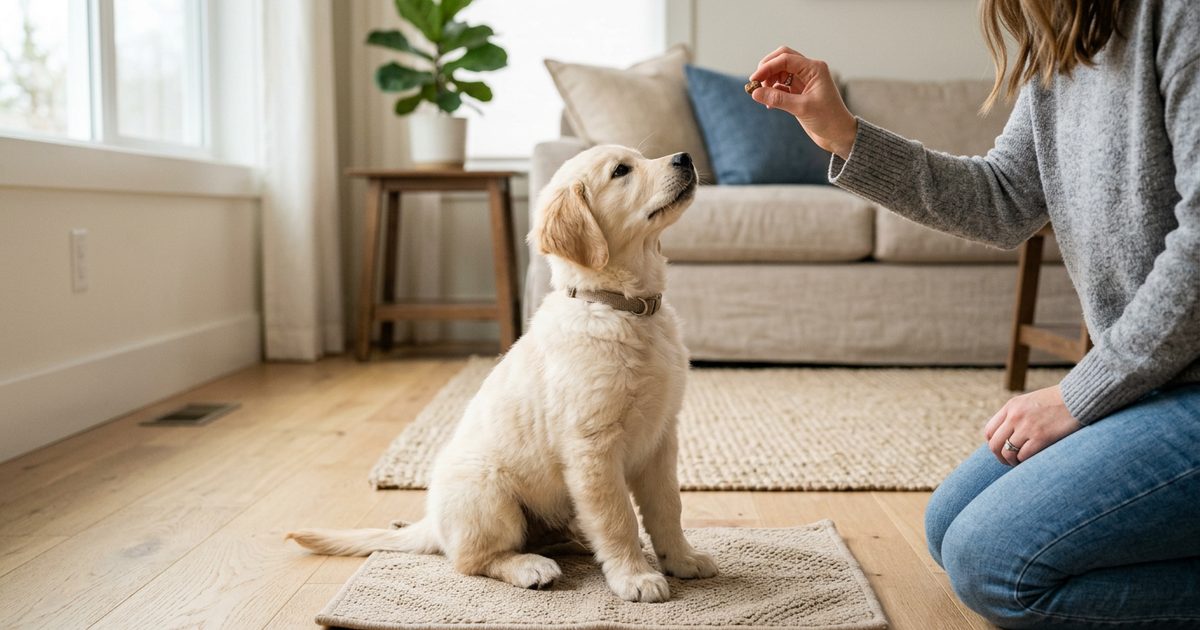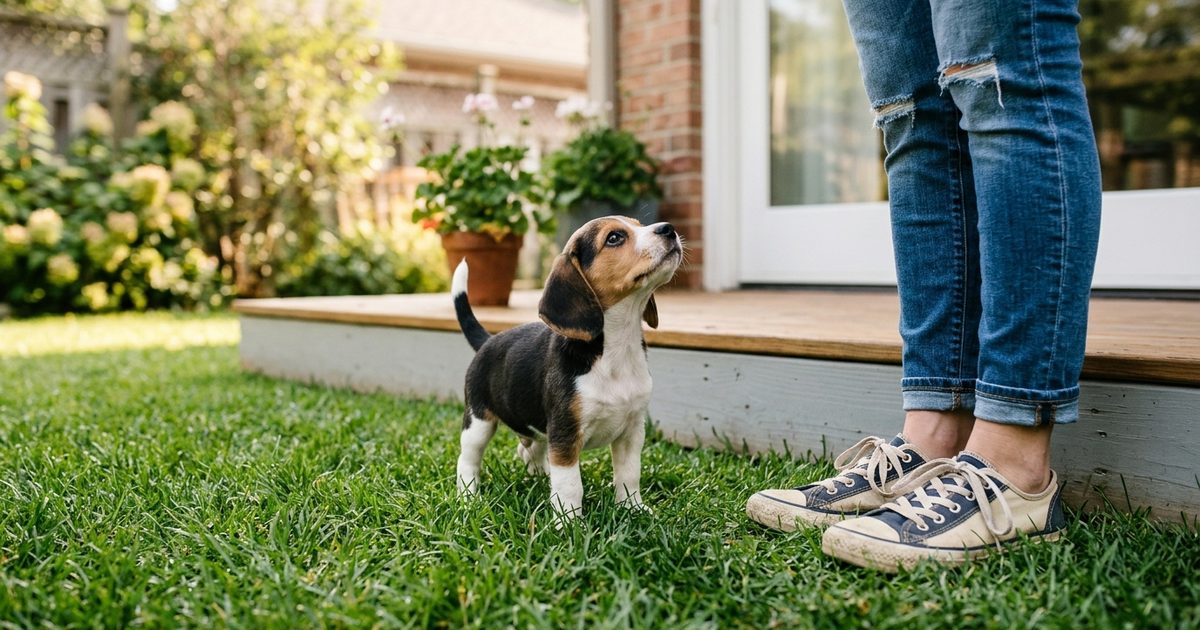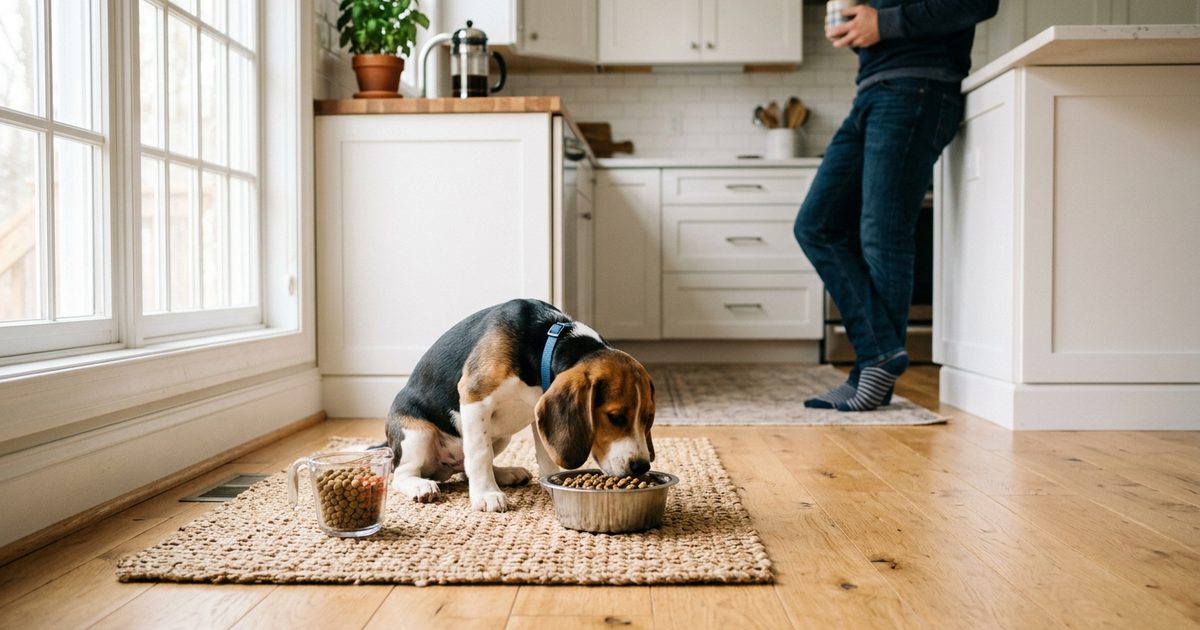
At six months many owners feel stuck. The puppy who learned sit in a week now seems to have forgotten it. Walks are harder, the recall is shaky and the sofa has a new chewed corner. This is normal. It is adolescence, and it is why 6 month old puppy training (and 7 month puppy training) looks different from the first weeks at home.
The good news: nothing is lost. Your puppy still knows what you taught. What changed is the world, your puppy’s body and how much competes for attention. This guide covers what to expect and what to practice from six months to a year.
Quick answer: how to train a 6 month old puppy
- Keep sessions short. Two to five minutes, a few times a day.
- Make it easier when a cue stops working. Go back to a quiet place, then add one change at a time.
- Use better rewards. Deliver them within a second or two of the right behavior.
- Stay reward-based. Harsher methods do not fix adolescence.
The sections below explain each step and what to practice from six months to a year.
Why 6 to 12 months feels harder
- More confidence. Your puppy is bolder, faster and curious about everything on a walk.
- More distractions. Smells, dogs and people matter more than a treat in your hand.
- Changing body. Teething is wrapping up, energy is high and coordination is still catching up.
- Habits are being set. Whatever gets rewarded now, including pulling and jumping, tends to repeat.
Treat it as a phase that needs patience and clear practice, not as disobedience. Harsher methods do not fix it. The AVSAB position statement on humane dog training recommends reward-based methods and warns that aversive ones can cause fear, stress and aggression.
What to do about the “forgotten” skills
When a cue stops working, do not repeat it louder. Walk it back instead:
- Make it easier. Practice indoors or in the yard first.
- Raise the reward. Use something better than usual: chicken, cheese, a game of tug.
- Add one change at a time. A new place, or a new distraction, or more time, never all three.
- Reward quickly. The marker word and the treat should come within a second or two of the right behavior.
6 month old puppy training: the focus
Reliability in new places. Practice the basics from the puppy obedience guide outside the home: a quiet street, a park edge, a friend’s garden.
Loose-lead walking. Reward your puppy for walking beside you and turn around, calmly, when the lead goes tight. Short walks with a clear job beat long chaotic ones.
Recall on a long line. Call your puppy when they are not too distracted, reward big, and let them go back to sniffing. Never call your puppy to end the fun every time. Keep off-lead recall for fenced areas until the response is solid.
Settle and alone time. Keep building the mat or crate settle from the crate training guide and extend time alone in small steps.
7 to 9 months: stretch the skills
- Duration. Longer stay, longer settle, a few seconds more at a time.
- Distance. Step back before you reward, one step at a time.
- Distraction. Practice with a person walking past, a dropped toy, another dog far away.
- Impulse control. Wait at doors, wait for the bowl, wait for the release word.
If mouthing or nipping returns when your puppy is tired or overexcited, go back to the calm redirects in our stop puppy biting guide.
10 to 12 months: real life
By now most puppies can do the basics in familiar places. The work is to make them hold up in real life.
- Practice cues around the neighborhood, at cafes with outdoor seating, and on different surfaces.
- Keep meeting new people, dogs and places at a pace your puppy enjoys. The socialization guide still applies after the first months.
- Give your puppy jobs: scent games, food puzzles, short training games. See dog enrichment ideas.
- Think about a force-free class if you have not already. It adds practice around other dogs.
A simple week for 6 to 12 months
| Day | Focus | How long |
|---|---|---|
| Mon | Loose-lead walk on a quiet street | 10 minutes |
| Tue | Recall on a long line in a safe space | 5 minutes |
| Wed | Settle and stay, add 5 seconds | 5 minutes |
| Thu | Impulse control: doors, bowl, release word | 5 minutes |
| Fri | Cues in a new place | 10 minutes |
| Sat | Scent game or food puzzle | 10 minutes |
| Sun | Rest, easy walk, relaxed play | any |
Use it as a template and swap days to suit your week. For how this fits into a daily routine, use the daily puppy training schedule and the schedule by age.
Common mistakes in adolescence
Dropping rewards too early. Reduce treats only when a behavior is reliable in many places, and do it gradually.
Too much freedom too fast. A puppy who was good for a week in the house is not yet ready for off-lead freedom everywhere.
Stopping training because it is “not working”. The dip passes if you keep practicing with easier steps and better rewards.
Too much exercise, too little thinking. Mental work tires a puppy as much as a long walk. Mix both.
When to ask for help
Speak to a qualified force-free trainer if you are stuck for weeks or daily life is hard. Speak to a veterinary behaviorist or certified behavior consultant if your puppy shows fear that does not settle, or growls, snaps or guards things. For anything sudden or physical, ask your vet first.
Sources
Guidance checked on October 4, 2026: