New Puppy Checklist: 12 Things to Have Ready Before Day One
Affiliate disclosure. This page contains an affiliate link to the K9 Training Institute free workshop. If you sign up through it we may earn a commission, at no extra cost to you. We only link to training that is force-free, and we were not paid to write this guide.
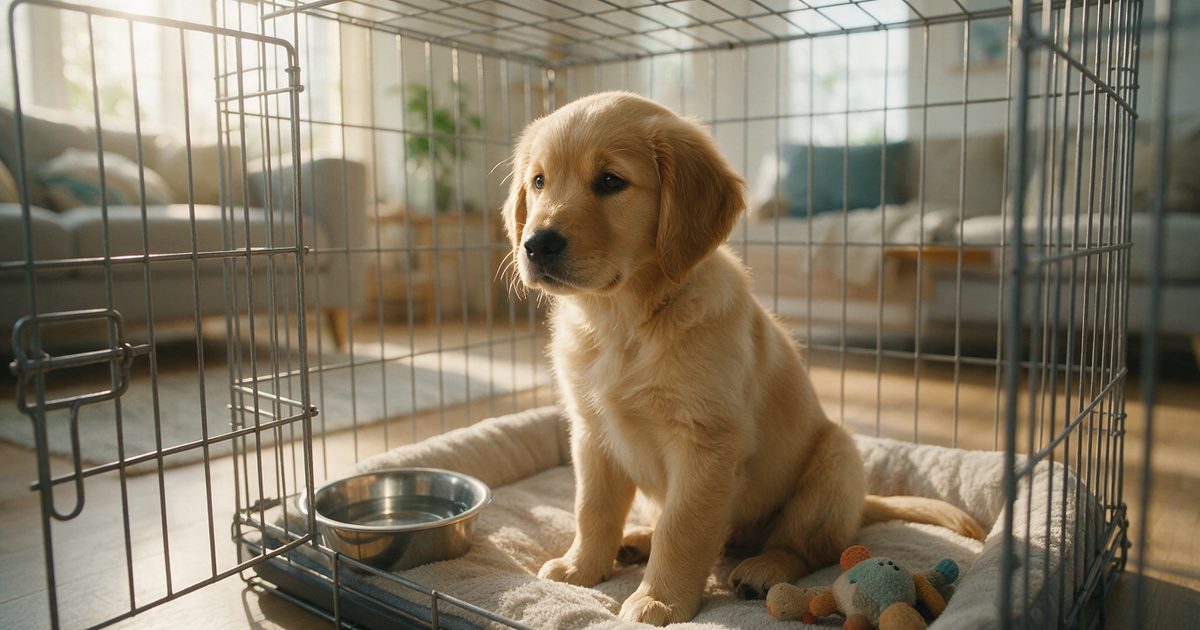
Bringing home a puppy goes wrong in the same way for most people: the excitement is real, the shopping is last-minute, and day one turns into a run to the pet shop with a frightened eight-week-old in the car. This new puppy checklist is built to prevent exactly that. Twelve things, sorted into what you buy, how you set up the room, and the calls you make before pickup — so that when your puppy actually arrives, there is nothing left to organize and you can just be with them.
Before you start
Two ideas will save you money and a lot of second-guessing.
The first is that a puppy needs far less equipment than the internet suggests, and most of what they do need is boring. A crate, a bed, bowls, a lead, a cleaner. The exciting purchases — the coats, the designer collars, the fifteen toys — can all wait until you know your puppy’s size and what they actually like.
The second is that half of this list is not shopping at all. It is deciding, in advance and out loud, how your household is going to run: who gets up for the early toilet trip, which rooms are off limits, what the puppy is and is not allowed on. Households that settle those questions before the puppy arrives have far fewer arguments in week two, and the puppy gets consistent answers, which is the whole basis of training.
Work through the list in order. Items one to seven are things to have in the house. Items eight to ten are the room. Items eleven and twelve are the parts most people forget.
The 12 things
1. A crate sized for now, not for later
Buy for your puppy’s current size, or buy a large crate with a divider you can move as they grow. A crate that is too big stops working as a den — a puppy will happily sleep in one end and toilet in the other, which is the opposite of what you want. The right size lets them stand up, turn around and lie flat, and no more.
2. A bed or mat that becomes the settle spot
Pick something washable and cheap for the first months, because it will get chewed and it will get wet. What matters more than the bed is that it lives in one place and becomes the spot where good things happen: chews, calm attention, sleep. That single mat later becomes the most useful training tool in the house.
3. Bowls, and the food they are already eating
Two bowls, one for water, one for food, both easy to wash. More importantly, ask the breeder or shelter what your puppy is currently eating and buy a bag of it. Arriving in a new home is enough change on its own. Keeping the food the same for the first stretch means that if something does upset their stomach, you have not added a second variable to guess between.
4. A flat collar with an ID tag, and a light lead
A plain flat collar that fits with two fingers underneath, and a short lightweight lead. That is all. No prong collars, no choke chains, no shock or vibration collars, whatever the packaging promises about pulling. This site sticks to force-free methods throughout, and equipment designed to work through discomfort has no place in it. If your puppy pulls later, that is a training question, not a hardware one.
5. A long line for the yard and open spaces
A 15- to 30-foot line clips to the same flat collar or a harness and lets your puppy explore and come back without ever being fully loose in an unfenced space. It is the single most useful thing for early recall work, because your puppy gets the experience of choosing to come back to you rather than being caught.
6. Chews, and somewhere to keep them
Puppies chew because they are teething and because it settles them. The question is never whether they chew, only what. Have several appropriate chews in the house from day one, keep them in one box, and put out two or three at a time rather than all of them. Rotating what is available keeps them interesting and costs nothing.
7. One enrichment feeder
A snuffle mat, a lick mat or a simple puzzle feeder turns a meal into ten minutes of sniffing and problem-solving. That matters more than it sounds: sniffing tires a puppy in a way that running does not, and a puppy who has had a chance to use their nose is a calmer puppy in the evening. One is enough to start.
8. Enzymatic cleaner, and plenty of it
Accidents will happen and how you clean them decides whether they happen again in the same spot. Enzymatic cleaner breaks down the odour rather than masking it. Avoid anything ammonia-based — ammonia is a component of urine, so to a puppy the cleaned patch smells like a toilet. Buy more than you think you need.
9. Baby gates and a puppy-proofed room
Decide which room your puppy starts in and make it safe: cables tucked away, houseplants moved, anything small and swallowable off the floor. Gates let you close off stairs and rooms without shutting doors, so your puppy can still see and hear the household. Space earns itself gradually — starting small and opening up is much easier than the reverse.
10. Their own quiet corner, away from the traffic
The crate and bed should sit somewhere your puppy can rest without being walked past every thirty seconds. Puppies sleep a great deal and an overtired puppy is a bitey, frantic puppy. Protecting sleep is not indulgence, it is the thing that makes the rest of your day work. Agree with everyone in the house that a sleeping puppy is left alone.
11. The vet appointment, booked in advance
Register with a practice and book the first appointment before pickup day, so you are not searching for a vet in your first week. Bring whatever records the breeder or shelter gives you. Vaccinations, parasite treatment and microchip registration are all conversations to have with your vet, who knows your area and your puppy — not something to settle from a list online.
12. A written routine everyone agrees on
The last item is a piece of paper on the fridge. Who does the early toilet trip and who does the late one. Where the puppy sleeps. Which furniture is allowed. What the rule is on feeding from the table. What word everyone uses for the toilet trip and what word means come here. A puppy learns from patterns, and a household that answers the same question five different ways is the most common reason training stalls. Pair it with a simple puppy training schedule once you are past the first week.
Common mistakes
Buying the biggest crate in the shop. It feels generous and it undermines the whole point. Size for now, or use a divider.
Buying fifteen toys at once. Everything is new to a puppy, so novelty is free. Three or four at a time, rotated, works better and costs less.
Cleaning with the wrong thing. Ammonia-based cleaners can make a spot more likely to be reused, not less. Enzymatic only.
Planning a welcome party. The urge to introduce your puppy to everyone in week one is understandable and it is too much. Quiet arrival, small household, gradual introductions. When you are ready to widen their world, work through it deliberately with a puppy socialization checklist rather than all at once.
Changing food on day one. Keep whatever they were eating, at least until the dust has settled.
When to ask a professional
A checklist covers gear and setup. It does not cover health, and it does not cover behavior that worries you.
Call your vet if your puppy is not eating or drinking, is unusually flat or sleepy, has ongoing diarrhea or vomiting, or if anything about them changes suddenly. Puppies are small and things move quickly with them — an early phone call costs you nothing.
For behavior, a qualified force-free trainer or a certified behaviorist is the right call if your puppy shows persistent fear, freezes or panics in ordinary situations, or reacts in a way that frightens you. Those are not things to work through from an article, and getting help early is far easier than undoing a pattern later.
Free dog training workshopWatch K9TI's free, prerecorded workshop on service-dog training methods for everyday dog owners.Frequently asked questions
How far in advance should I get everything ready?
Aim to have the gear in the house and the room set up a few days before pickup, not the night before. That gives you time to swap anything that turns out to be the wrong size, and it means your first evening is spent with your puppy rather than assembling a crate.
Do I need a crate if I am planning to use a playpen?
They do different jobs. A pen gives a safe area to be loose in, a crate gives a small den for sleep and settled downtime. Many owners use both, with the crate sitting open inside the pen so the puppy chooses it.
What should I not buy for a new puppy?
Skip prong collars, choke chains, shock or vibration collars, and anything sold as a quick fix for pulling or barking. They work against the training approach on this site and can create fear that is harder to undo than the original behavior.
Should I change my puppy's food when they come home?
Get a bag of whatever the breeder or shelter is feeding and keep them on it at first. A new home is already a big change, and switching food at the same time makes it hard to tell what is behind an upset stomach. Any change is best made gradually and after things have settled.
How soon should the first vet visit be?
Book it before pickup day so you are not calling around during your first week. Most owners get an early appointment for a general check and to talk through vaccinations, parasite treatment and microchip registration. Your vet is the right person to set that timing, not a checklist.
What if my puppy will not settle on the first night?
Broken first nights are normal and they usually improve as the routine gets predictable. Keeping the crate next to your bed, a last toilet trip right before lights out, and a calm response rather than a lively one all help. Do not expect a full night straight away.