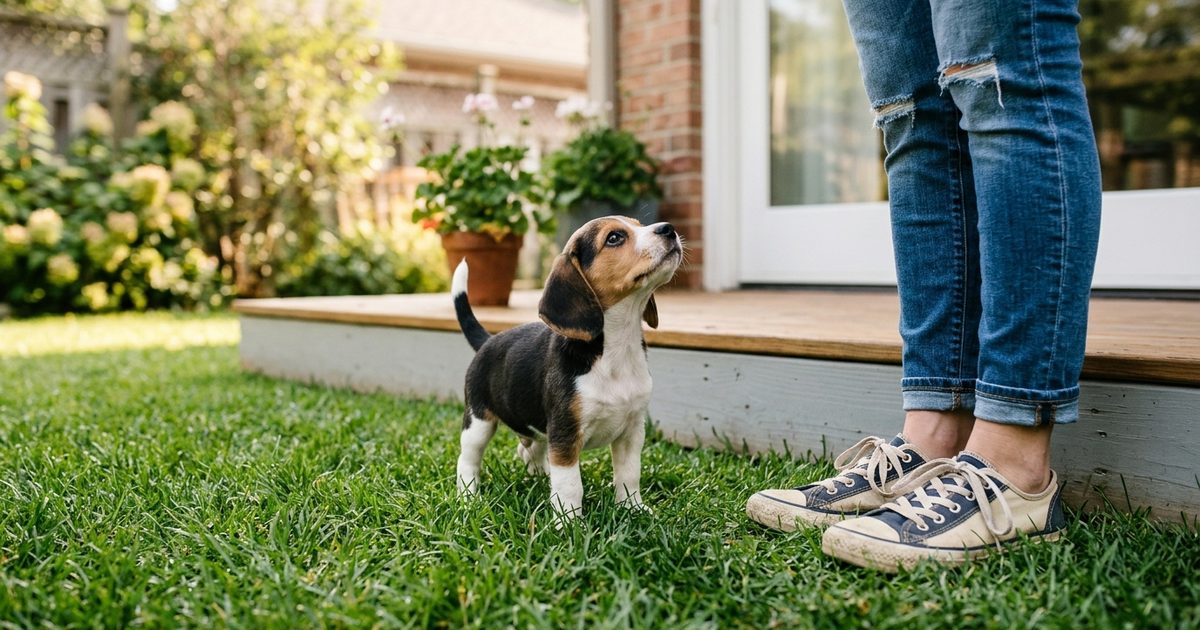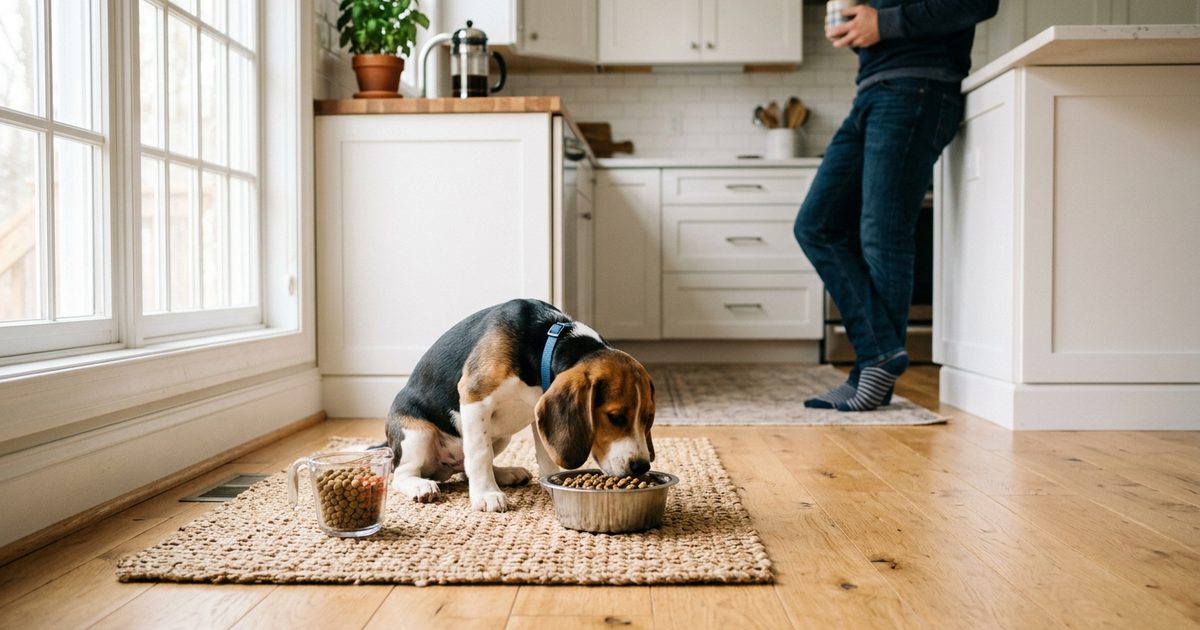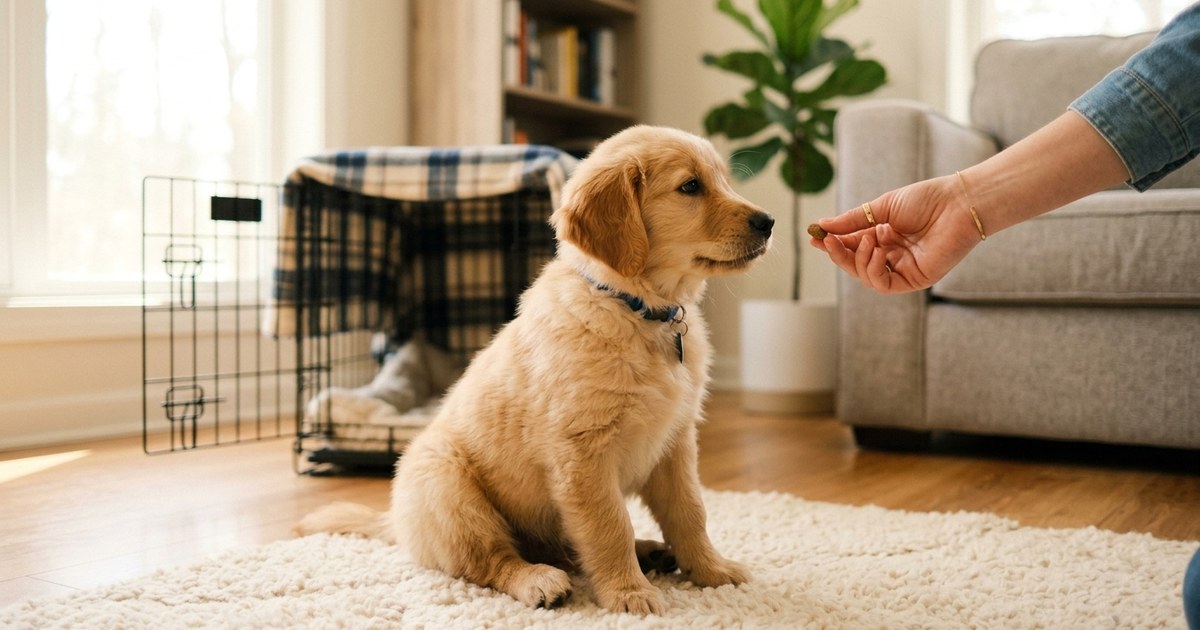
A 12 week old puppy schedule looks like the 8 week one, stretched a little. Awake blocks are longer, toilet trips can be a bit further apart, and training sessions grow from one minute to two or three. Sleep is still most of the day. Below is a full day with clock times you can adjust.
Keep the order. Move the times to fit your life.
What changes at three months
- Bladder. Humane World for Animals gives a rule of thumb of about one hour per month of age. At three months that is roughly three hours, as a limit, not a target.
- Meals. The AKC says four meals a day usually meet a puppy’s needs up to 12 weeks, and that sometime between three and six months you can drop to three.
- Sleep. The AKC says puppies usually sleep 18 to 20 hours a day. Naps are still the backbone of the day.
- Socialization. The AVSAB describes the first three months of life as the primary socialization period. This is the time to keep new experiences coming, gently.
A sample day for a 12 week old puppy
| Time | What happens |
|---|---|
| 6:30 | Wake, straight outside to the toilet spot |
| 6:45 | Breakfast, part of it by hand in a 2-minute training session |
| 7:00 | Toilet, play, short sniff in the yard |
| 7:45 | Nap in crate or pen with a chew |
| 9:45 | Toilet, one new thing: a sound, a surface, a calm visitor |
| 10:15 | Nap |
| 12:00 | Toilet, lunch, toilet |
| 12:20 | Training game (sit, come or settle on a mat) |
| 12:45 | Nap |
| 14:45 | Toilet, play, a short car sit or a carry outside |
| 15:30 | Toilet, nap or quiet chew |
| 17:30 | Toilet, dinner, toilet |
| 18:00 | Play and a second short training session |
| 19:00 | Calm time on a mat near the family |
| 20:30 | Toilet, quiet evening |
| 22:30 | Last toilet trip, bed in the crate |
| Night | One calm trip out if your puppy wakes and cries |
The table shows three main meals with room for a fourth. Follow the number your vet suggests and keep meal times the same every day. Our puppy feeding schedule explains how meals change with age.
Still watch for sniffing and circling between slots. Some 12 week old puppies need to go out more often than this.
Awake time and naps
At 12 weeks many puppies manage a bit more activity before they need to rest. That does not mean more is better. A puppy who stays up too long often ends up biting, zooming and ignoring cues.
After each awake block, guide your puppy to their crate or pen with a chew. The AKC suggests watching for signs of overtiredness and helping your puppy wind down. Our puppy sleep schedule covers naps and bedtime in more detail.
Training at 12 weeks
Two to three minutes, a few times a day. Pick one new skill and one your puppy already knows.
- Name and come. Reward every time your puppy turns to you or comes to you.
- Sit and down. Lure with food, then fade the lure.
- Settle on a mat. Reward calm lying down near you.
- Handling. Touch paws, ears and mouth briefly, then reward.
Use part of their daily food. The AKC advises keeping treats small and reducing meal portions when you train with food. Our puppy obedience training guide has short blocks for each skill.
Socialization at three months
Socialization is not about meeting as many dogs as possible. It is about calm, positive experiences at your puppy’s pace.
- One new thing per awake block is plenty.
- Let your puppy watch from a distance first.
- Pair new sights and sounds with food or play.
- Back off if your puppy freezes, hides or tries to leave.
The puppy socialization checklist lists what to cover. Ask your vet which places and dogs are safe before vaccinations are complete. The AVSAB position statement supports puppy classes from about seven to eight weeks with appropriate vaccinations, so a good class is worth asking about.
Nights
Many puppies sleep longer by 12 weeks. Humane World for Animals says most puppies can comfortably sleep seven hours without a bathroom break, but expect one trip for a while yet.
Last toilet trip just before bed. If your puppy wakes and cries, take them out calmly, no play, back to the crate. The crate training schedule covers nights week by week.
Alone time
Keep building it slowly. A few minutes in their pen with a chew while you are in another room, then a little longer. Humane World for Animals advises that puppies under six months should not stay in a crate for more than three or four hours at a time. If you work, plan the middle of the day: our puppy training schedule shows a weekday built around work.
Common mistakes
Skipping naps because the puppy seems fine. Overtired puppies look energetic. Rest them anyway.
Too much freedom too soon. Accidents still happen at 12 weeks. Keep the pen and the timer.
Stopping socialization. Three months is not the end of learning. Keep new experiences gentle and regular.
Long training sessions. Short sessions teach more.
When to ask a professional
Speak to your vet if your puppy needs to toilet very often, strains, has diarrhea, loses appetite or seems unusually tired. Talk to a qualified force-free trainer if biting or crate crying does not ease after a couple of weeks of a steady routine. If your puppy is often fearful in new places, a certified behavior consultant can help early. The puppy training schedule by age shows what comes next.
Sources
Guidance checked on October 21, 2026: