A crate training puppy schedule answers two questions: when your puppy goes into the crate, and for how long. Get those two right and most crying stops, because your puppy goes in tired, toileted and with something to chew.
This page is the timing. For how to introduce the crate in the first place, start with our step-by-step crate training guide.
The limits first
Humane World for Animals advises that puppies under six months should not stay in a crate for more than three or four hours at a time, and that a dog crated all day and all night does not get enough exercise or human contact.
So the crate is for naps, nights and short rests. It is not the answer to a full workday. For long days, use a playpen with a toilet area or a midday visit. Our daily puppy schedule shows how to plan that.
The crate cycle
Every crate session follows the same four steps:
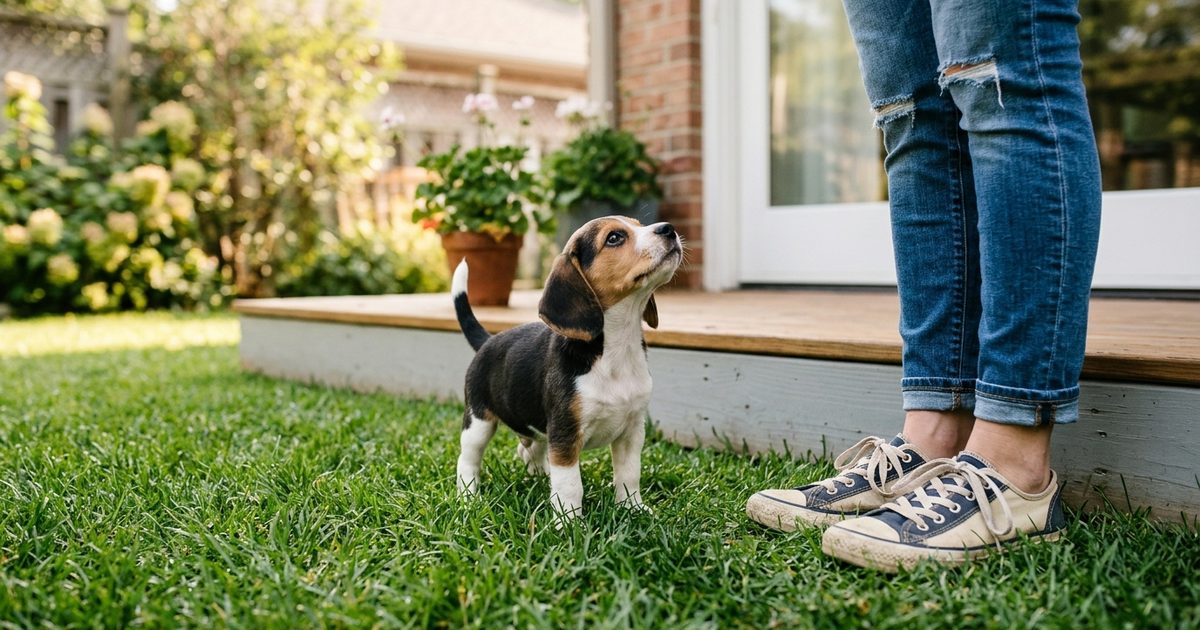
- Toilet trip outside.
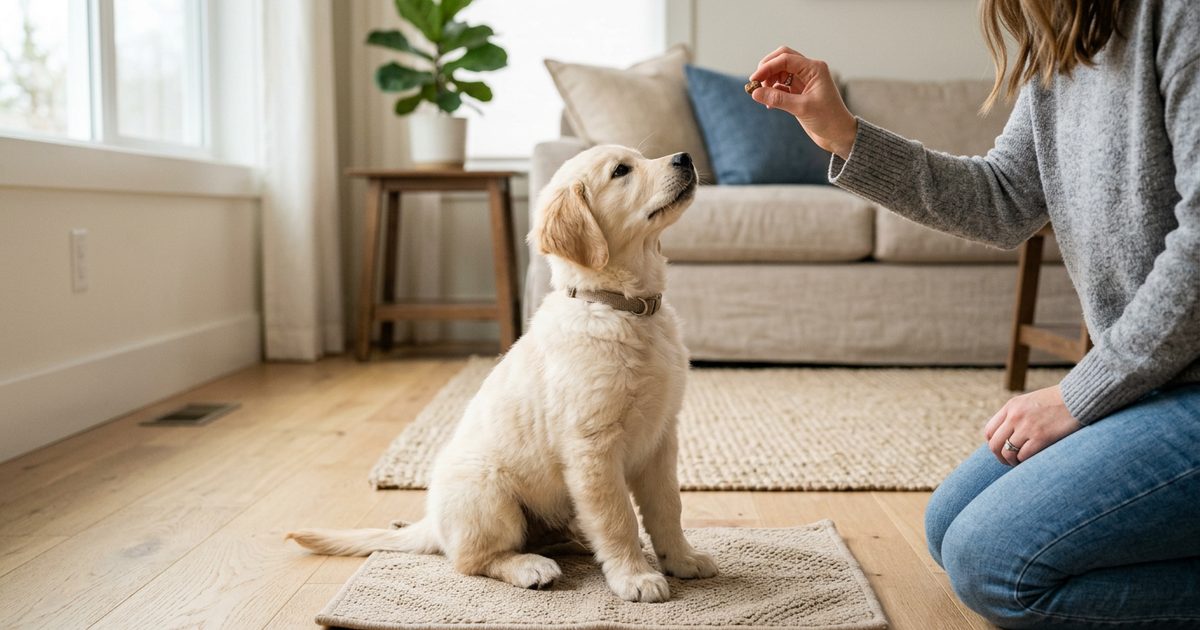
- A little activity that fits the time of day: play, a short training session, a sniff in the yard.
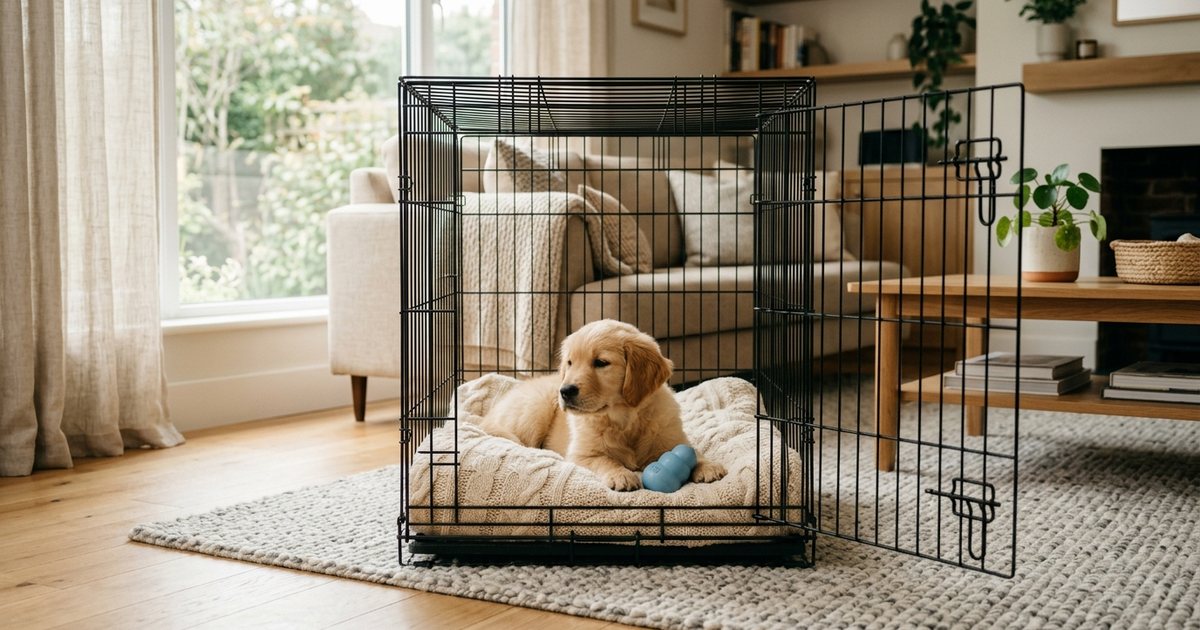
- Into the crate with a chew or food toy.
- Out after the nap, straight to the toilet spot.
A puppy who goes in toileted and tired settles fast. A puppy who goes in full of energy and a full bladder will complain, and they have a point.
A sample day for a 10 to 12 week old puppy
| Time | Crate or free |
|---|---|
| 6:30 | Out of crate, straight to toilet |
| 6:45–7:30 | Breakfast, toilet, play, short training |
| 7:30–9:30 | Nap in crate with a chew |
| 9:30–10:00 | Toilet, play |
| 10:00–12:00 | Nap in crate or pen |
| 12:00–13:00 | Toilet, lunch, short training, calm time |
| 13:00–15:00 | Nap in crate |
| 15:00–16:00 | Toilet, play, socialization |
| 16:00–17:30 | Quiet time in pen or crate |
| 17:30–19:00 | Toilet, dinner, play, training |
| 19:00–20:30 | Calm time with the family, nap if tired |
| 22:30 | Last toilet trip, bed in crate |
The exact minutes do not matter. The order does.
First nights
- Put the crate next to your bed. Your puppy is alone for the first time in their life. Hearing you helps.
- Do the last toilet trip as late as you can.
- Keep the room dark and quiet.
- If your puppy wakes and cries, carry or walk them to the toilet spot. No talking, no play. Straight back to the crate.
- A few quiet words or a hand near the door can help in the first nights.
Humane World for Animals suggests that if your dog has not been rewarded for whining by being let out, you can try ignoring whining. In practice, with a young puppy, check first whether they need the toilet. If they do, take them. If they have just been, wait for a quiet moment before any attention.
Moving the crate later
Once nights are calm, you can move the crate gradually to where you want it long term. Move it a short distance every few nights, not all at once.
How the schedule changes with age
- Fewer naps. Older puppies need fewer but still long rests.
- Longer awake spells. More play, more training, more time out and about.
- Fewer night trips. Most puppies drop night trips as bladder control improves.
- More freedom. A pen, then a room, then more of the house, each step earned.
See the puppy training schedule by age for what else changes at each stage.
Common mistakes
Crate only when leaving. The crate then predicts being alone. Use it for naps while you are home.
Skipping the toilet before the crate. A full bladder is the most common reason for crying.
Long stretches. Beyond the limits above, use a pen or a helper.
Lively play right before bed. Wind down with calm time and a chew instead.
When to ask a professional
Talk to a veterinary behaviorist or certified behavior consultant if your puppy panics in the crate despite a slower pace, or shows distress whenever left alone. Talk to your vet if your puppy needs to toilet unusually often or cannot hold on for the gaps above.
Sources
Guidance checked on September 27, 2026: