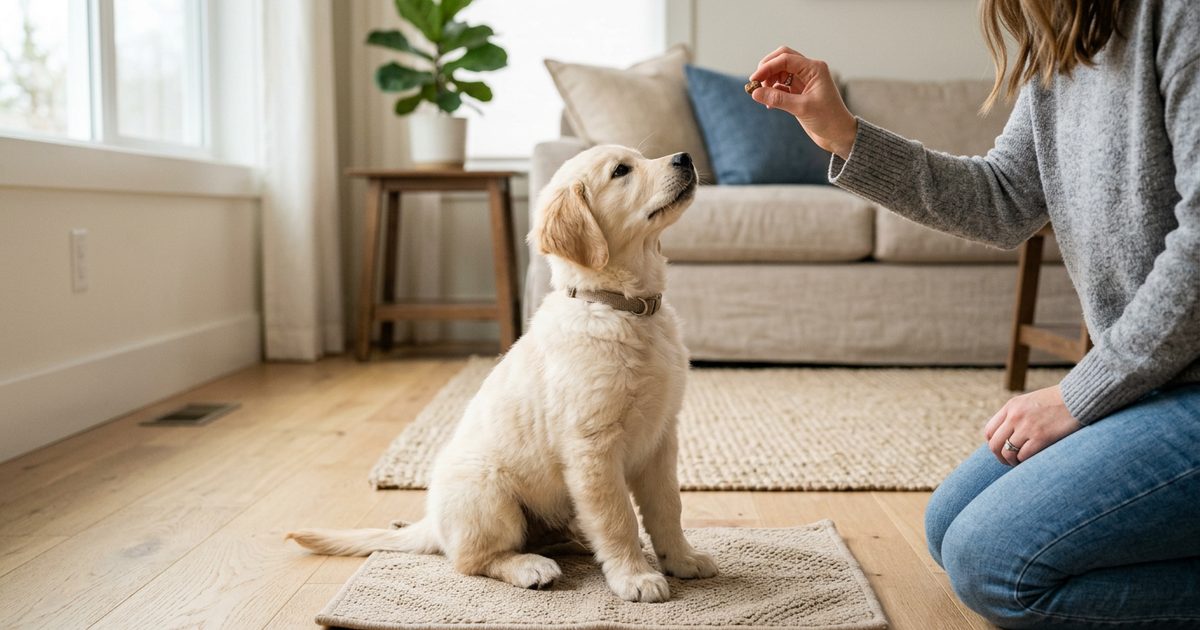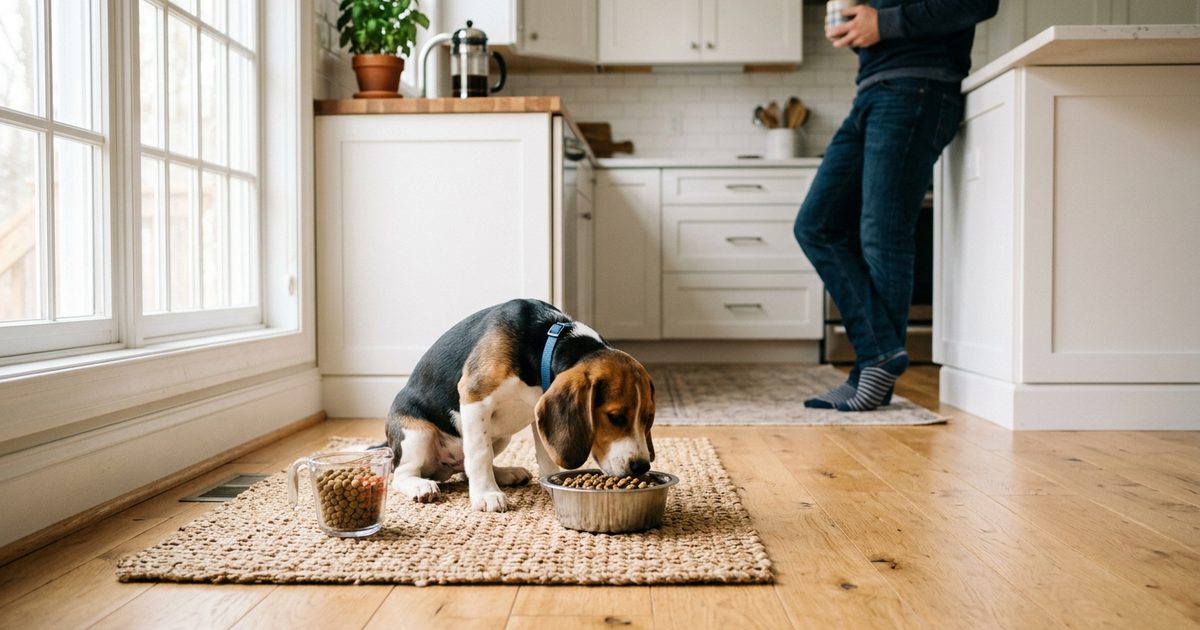
A puppy training schedule is really a day that repeats: toilet, food, play, a little training, sleep, and again. When the pattern is predictable, accidents drop, biting drops, and your puppy settles faster. Below is a full day for a young puppy in a home where people work.
Use it as a puppy timetable: adjust the clock times to your life and keep the order. For a younger puppy, start with the 8 week old puppy schedule.
The rule behind every schedule
Take your puppy out after they wake up, after eating or drinking, after play, and on a timer in between. Humane World for Animals suggests at least every two hours for a young puppy, and notes that a puppy may be able to hold their bladder for about one hour for every month of age.
Then give them a rest. Puppies need a lot of sleep, and a tired puppy is the one who bites ankles. The puppy sleep schedule shows how to plan naps and nights.
A sample weekday for a 10 to 12 week old puppy
| Time | What happens |
|---|---|
| 6:30 | Wake, straight outside to the toilet spot |
| 6:45 | Breakfast, part of it by hand during a 2-minute training session |
| 7:00 | Toilet again, then short play |
| 7:30 | Nap in crate or pen with a chew |
| 9:30 | Toilet, a few minutes of play or a sniff in the yard |
| 10:00 | Nap |
| 12:00 | Toilet, lunch, short training session |
| 12:30 | Toilet, calm time with you nearby |
| 13:00 | Nap |
| 15:00 | Toilet, play, one socialization item |
| 16:00 | Nap or quiet chew |
| 17:30 | Toilet, dinner |
| 18:00 | Toilet, play, a short training session |
| 19:00 | Calm time on a mat near the family |
| 20:30 | Toilet, quiet evening |
| 22:30 | Last toilet trip, bed in the crate |
| Night | One quiet trip out if your puppy wakes and cries |
This is a starting point. Some puppies need to go out more often. Watch for sniffing, circling or wandering off, and go out straight away. The puppy potty training schedule breaks toilet trips down by age.
Fitting it around a workday
A young puppy cannot hold on or stay confined for a full workday. Humane World for Animals advises that puppies under six months should not stay in a crate for more than three or four hours at a time. Plan the middle of the day before your puppy comes home.
- Work from home or take leave for the first weeks if you can.
- A midday visit from a dog walker, neighbor or family member.
- A puppy pen with a toilet area for longer stretches, instead of a crate.
- Daycare only once your vet is happy with vaccinations and your puppy copes with busy places.
If you work from home, the schedule still applies. Put your puppy in their pen during calls. A puppy who follows you around all day often struggles later when you do leave.
Where training fits in
Training does not need a separate block of time. Fold it into the day.
- Before meals: a few repetitions of sit or down, with kibble from breakfast.
- During toilet trips: reward your puppy for going in the right spot, then practice their name on the way in.
- Evening: one short session on a new skill, one on something your puppy already knows.
How many training sessions a day? In the sample day above there are three short ones: around breakfast (about two minutes), around lunch and in the early evening. For a young puppy, one to three minutes each is plenty; older puppies can manage two to five minutes. Several tiny sessions teach more than one long one.
Our puppy obedience training guide has short blocks you can drop into these slots.
Alone time: build it on purpose
Being alone is a skill. Start with a minute in another room while your puppy chews something in their pen. Come back before they get upset. Add time slowly over days and weeks. The crate training guide covers building this up in a crate.
If your puppy cries hard every time you leave the room, go back a step. Constant distress is a reason to talk to a professional, not to push through.
Nights
Put the crate near your bed for the first nights, so you can hear your puppy and they can hear you. If they wake and cry, take them out calmly, with no play, and put them back. As bladder control improves, night trips drop away. The crate training schedule covers nights in more detail.
Common mistakes
Freedom between toilet trips. A puppy loose in the house after a missed trip is where most accidents happen. Use the pen.
Skipping naps. Overtired puppies look energetic. They bite, zoom and ignore cues. Put them down to rest.
Weekends off. A different routine on Saturday and Sunday is confusing. Keep the pattern.
Long crate stretches. Use a pen or a midday visit instead.
When to ask a professional
Talk to a qualified force-free trainer if you cannot get the day to work after a couple of weeks. Talk to a veterinary behaviorist or certified behavior consultant if your puppy panics when alone. Speak to your vet if your puppy needs to toilet very often, strains, or has accidents after being reliable, because those can be medical.
Sources
Guidance checked on September 27, 2026: