A puppy training schedule by age helps you focus on the right thing at the right time. An eight-week-old needs a routine and a safe place to sleep. A five-month-old needs practice in the real world. Trying to do both at once is how owners burn out.
Use the stages below as an order, not a deadline. If your puppy arrived later, start at the top and move faster. If a stage is still hard, stay there.
8 to 10 weeks: home, routine, trust
Focus: a predictable day and a puppy who feels safe with you.
- A full day with clock times is in our 8 week old puppy schedule.
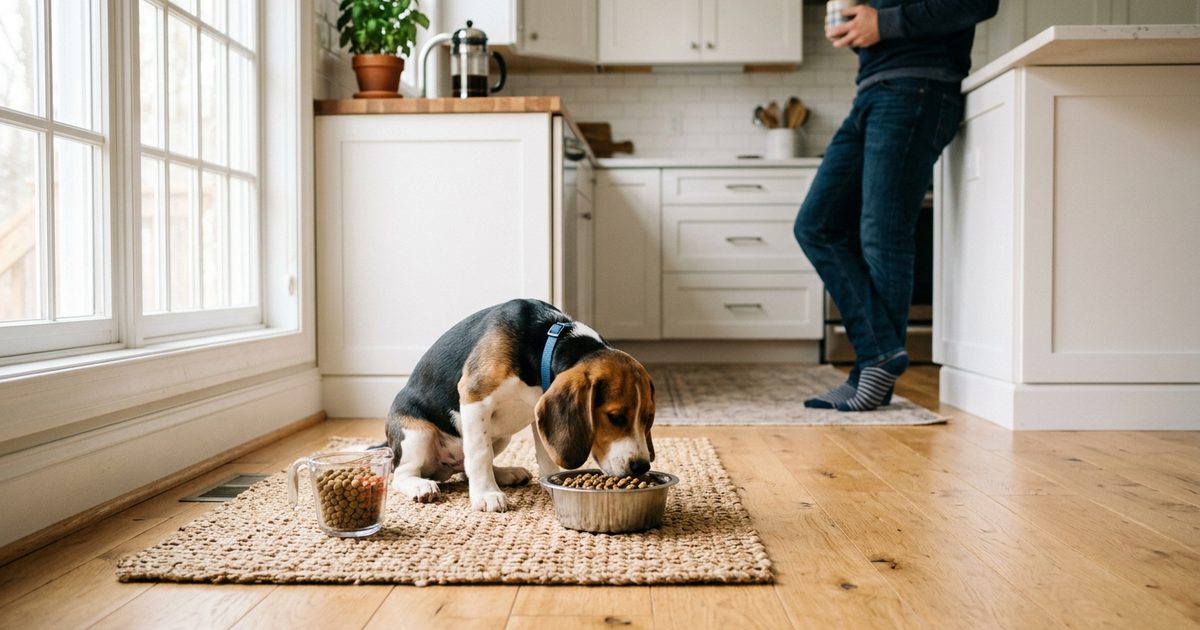
- Toilet trips on a timer, plus after sleeping, eating and play. Use our potty training schedule.
- A crate or playpen introduced with the door open and meals nearby. See crate training for puppies.
- Name response: say the name once, reward when your puppy looks.
- Handling: touch a paw, an ear, the collar for a second, then reward.
- Calm household sounds and surfaces from the socialization checklist.
- A day-by-day start in the first week plan.
Can wait: long walks, formal obedience, busy places.
10 to 12 weeks: first skills
Focus: simple behaviors that make daily life easier.
- A full day with clock times is in our 12 week old puppy schedule.
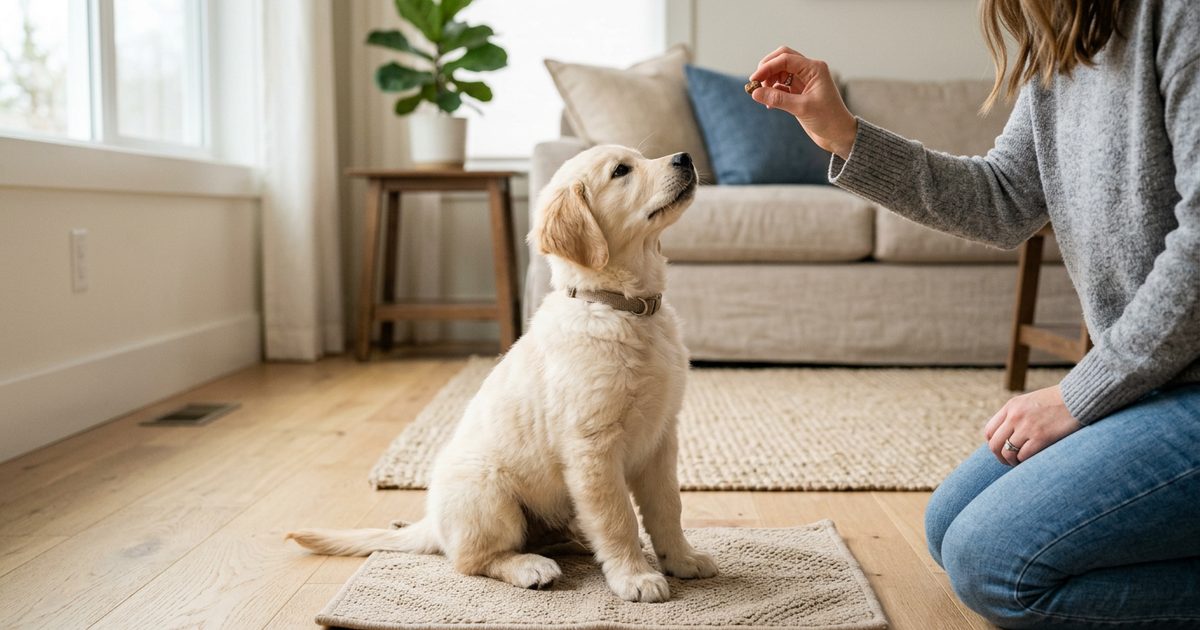
- Sit and down, lured with food, then with a hand signal.
- Come, in a quiet room, from two or three steps away.
- A settle mat: reward your puppy for lying on it while you sit nearby.
- Short practice being alone in another room, then a few minutes more.
- Redirecting biting to a toy. See how to stop puppy biting.
Can wait: stay with distance, walking on busy streets, long alone time.
3 to 4 months: the world, from a distance
Focus: calm exposure to new things and skills in new places.
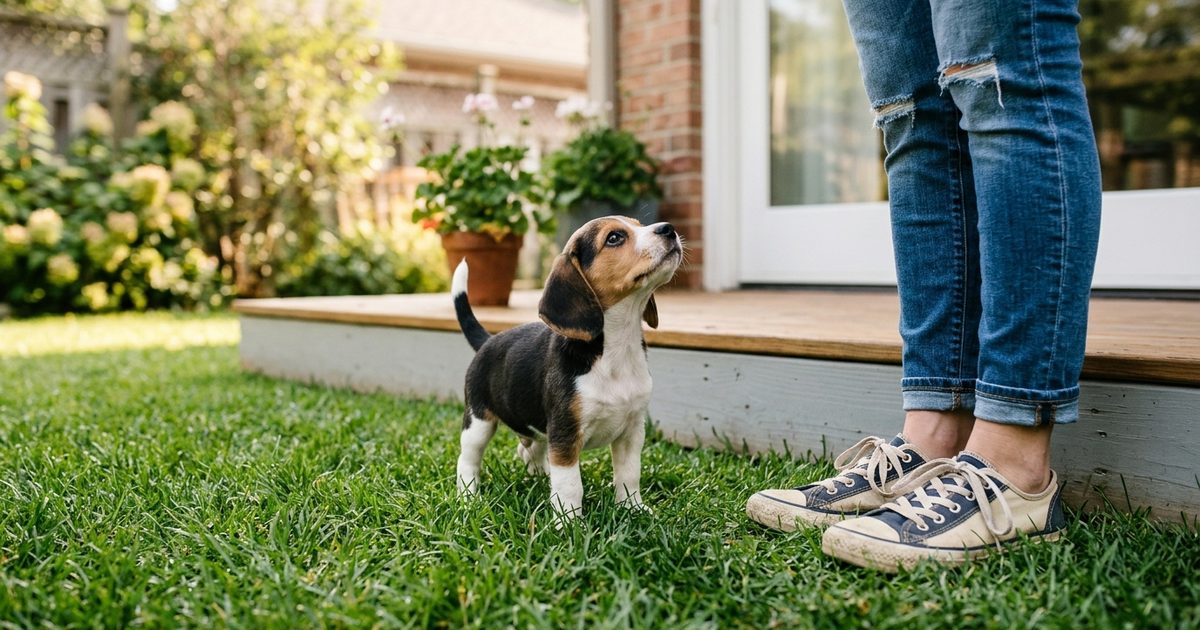
- Practice sit, down and come in the yard, then somewhere quiet outside.
- First leash walks: reward your puppy for being next to you, often.
- Watch people, traffic and calm dogs from well back.
- Leave it: ignore one thing, get something better.
- A short wait at doors and before meals.
This is the block people rush. The early socialization window is closing, so it is tempting to cram everything in. Do the opposite: more distance, fewer items, calm repetition. The puppy socialization guide has the full list.
4 to 6 months: reliability and adolescence
Focus: keeping what you built as your puppy gets bolder.
- Practice cues in more places and with more distraction, one change at a time.
- Build duration on the settle mat and a longer stay.
- Recall on a long line in open spaces, never chasing.
- Longer alone time, built in small steps.
- Keep adding a little novelty every week.
Many puppies seem to “forget” things around this age. That is common. Make the task easier, raise the reward, and keep practicing. It is a phase, not a failure. For what to practice after six months, see 6 to 12 month puppy training.
A sample week at each stage
| Stage | Daily training | Weekly goal |
|---|---|---|
| 8–10 weeks | 2–3 very short sessions: name, handling, crate games | toilet trips on schedule, crate with door open |
| 10–12 weeks | 3 short sessions: sit, down, come, settle | 2 new socialization items at home or in the yard |
| 3–4 months | 3 short sessions, one outside the house | one skill practiced in a new place |
| 4–6 months | 2–3 sessions, more real-world practice | one step more freedom or duration |
For how those sessions fit into an actual day, use the daily puppy training schedule.
Common mistakes
Following the dates, not the puppy. A stage ends when it is easy, not when the calendar says so.
Skipping the routine. Commands will not fix a chaotic day. The first block is the foundation for everything after it.
Too much freedom at four months. A puppy who has been good for a week is not yet reliable. Add freedom in small steps.
Stopping socialization early. Puppies who meet nothing new after four months often become more wary. Keep going through the first year.
When to ask a professional
Contact a qualified force-free trainer if you are stuck on the same stage for weeks, or if your puppy’s behavior makes daily life hard. Contact a veterinary behaviorist or certified behavior consultant if your puppy shows fear that does not settle, or growls, snaps or guards things. For anything physical or sudden, speak to your vet first.
Sources
Guidance checked on September 27, 2026: