Crate training a puppy works when the crate becomes the best place in the house: meals happen there, chews appear there, and nothing bad ever starts there. Go in small steps, and let your puppy’s body language tell you when to move on.
Below are eight steps, from setting up the crate to quiet nights. For timings through the day, pair this with our crate training schedule.
Before you start
Size. Humane World for Animals says the crate should be large enough for your dog to stand up and turn around in. If you buy an adult-size crate for a small puppy, use a divider so it does not become a bedroom with a toilet corner.
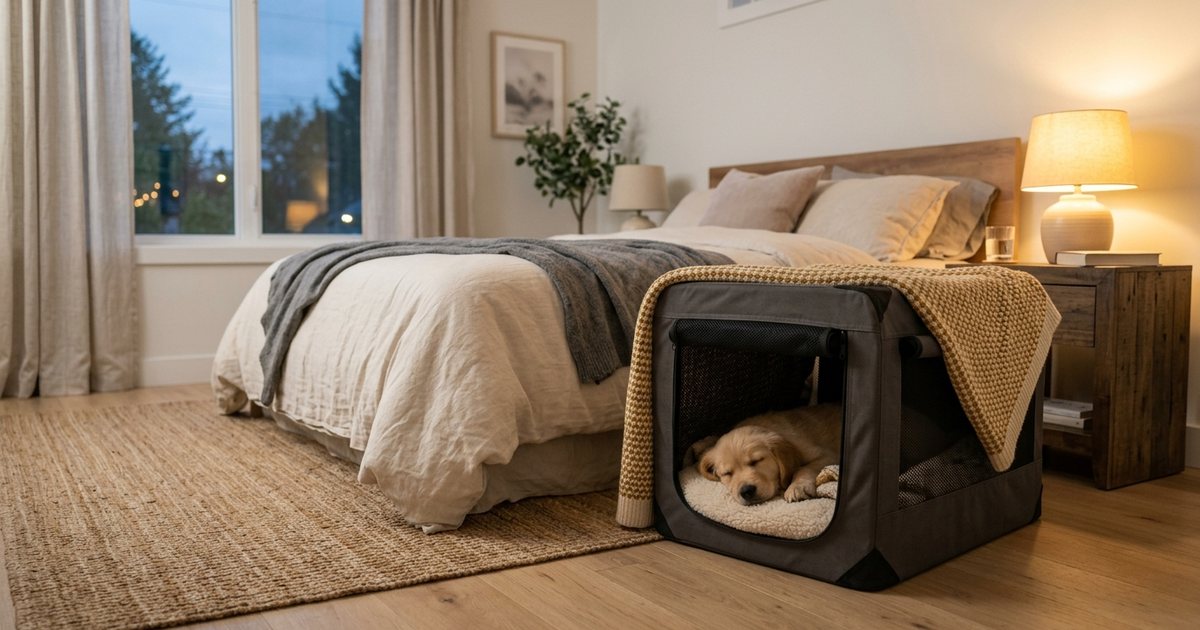
Place. Put the crate where the family spends time during the day. For the first nights, move it next to your bed. The first-week training plan shows how crate time fits into the first days.
Limits. Humane World for Animals advises that puppies under six months should not stay in a crate for more than three or four hours at a time. For longer stretches, use a playpen with a toilet area or a midday visit. The puppy training schedule shows where those breaks fit in a workday.
The 8 steps
1. Open door, good things inside
Leave the door open. Drop a treat or two inside when your puppy is not looking. Let them discover that the crate produces food. No pushing, no closing.
2. Meals in the crate
Put the food bowl near the crate, then just inside, then at the back. Your puppy walks in on their own to eat. The door stays open.
3. Crate games
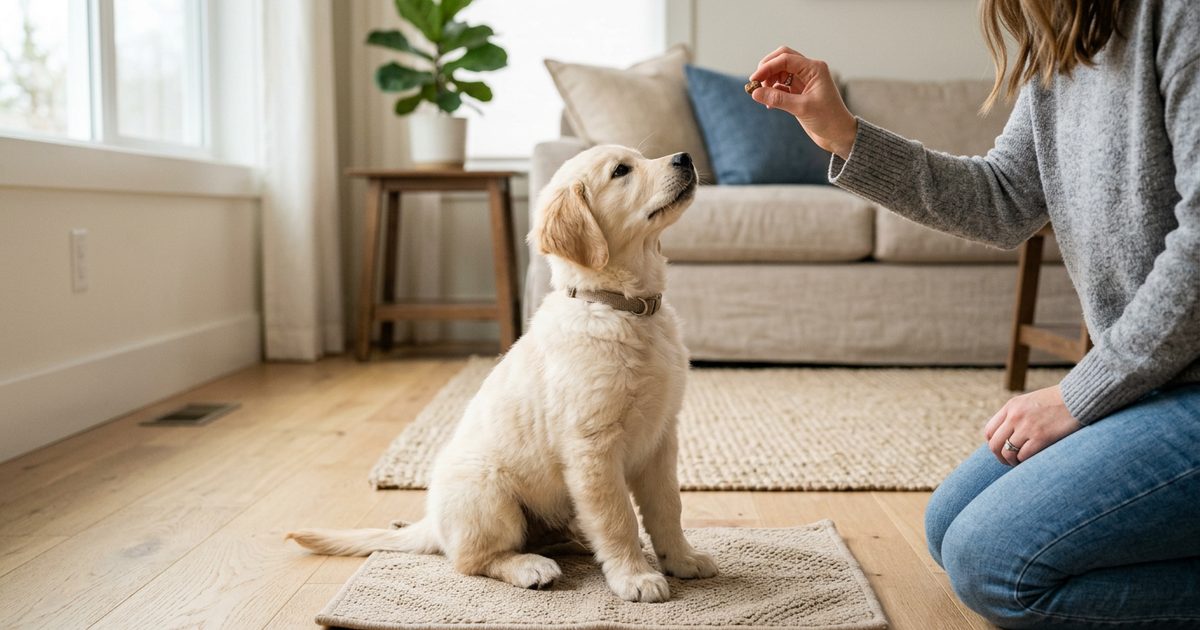
Toss a treat in. When your puppy goes in, say “yes” and toss another in. Let them come out. Repeat a few times in a short session. Going in becomes a game, not a trap.
4. Close the door for a moment
When your puppy is eating inside, close the door for a few seconds, then open it before they finish. Build up gradually, a little longer each time, while they are busy with food or a chew.
5. Rest with you nearby
Give your puppy a food toy or a chew in the crate, door closed, while you sit nearby reading or working. Open the door before they get restless. You are teaching them that closed doors lead to calm, not to being left.
6. Leave the room briefly
With your puppy busy on a chew, step out of the room for a moment, then come back. Keep your comings and goings boring. Slowly build to a few minutes, then longer.
7. Nights
Last toilet trip, then into the crate with the lights down. If your puppy wakes and cries, take them out calmly to the toilet spot, with no play, then back to the crate. A hand near the crate often helps in the first nights. The potty training schedule shows how night trips change with age.
8. Short absences from the house
Once your puppy rests calmly for longer spells while you are home, start leaving the house for a few minutes. Add time slowly. Put the crate or pen in the same spot so it feels familiar.
Reading your puppy
Moving on is fine when your puppy walks in on their own, eats and chews inside, lies down, and settles within a few minutes.
Go back a step when your puppy refuses to go in, pants, drools, scratches at the door, screams, or will not touch food inside. The step was too big.
Common mistakes
Closing the door on day one. Most crate problems start with the door closing before the crate means anything good.
Letting out a panicking puppy after it escalates. This can teach that louder crying opens the door. Better to prevent panic by moving more slowly.
Only using the crate when you leave. Then the crate predicts being alone. Use it while you are home too.
Long stretches. Too much time in the crate is hard on a puppy. Use a pen or a helper for long days.
When to ask a professional
Contact a veterinary behaviorist or a certified behavior consultant if your puppy panics in the crate even after you slow down, injures themselves trying to get out, or shows distress whenever left alone in any space. That can point to separation-related problems, which need a tailored plan rather than more crate time.
Sources
Guidance checked on September 27, 2026: