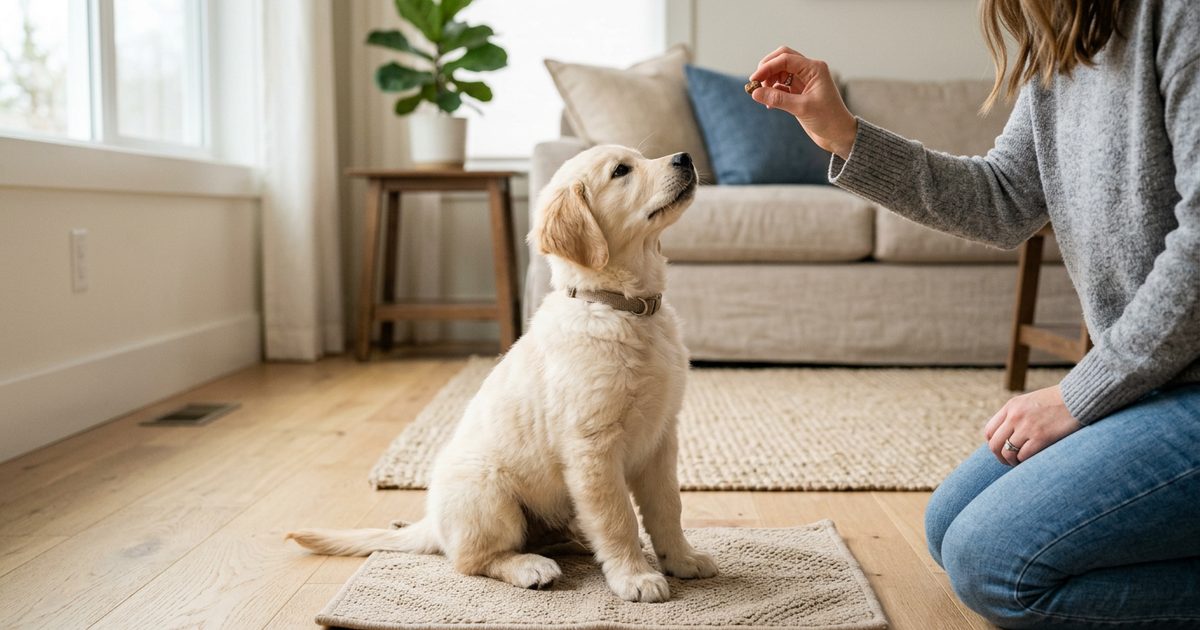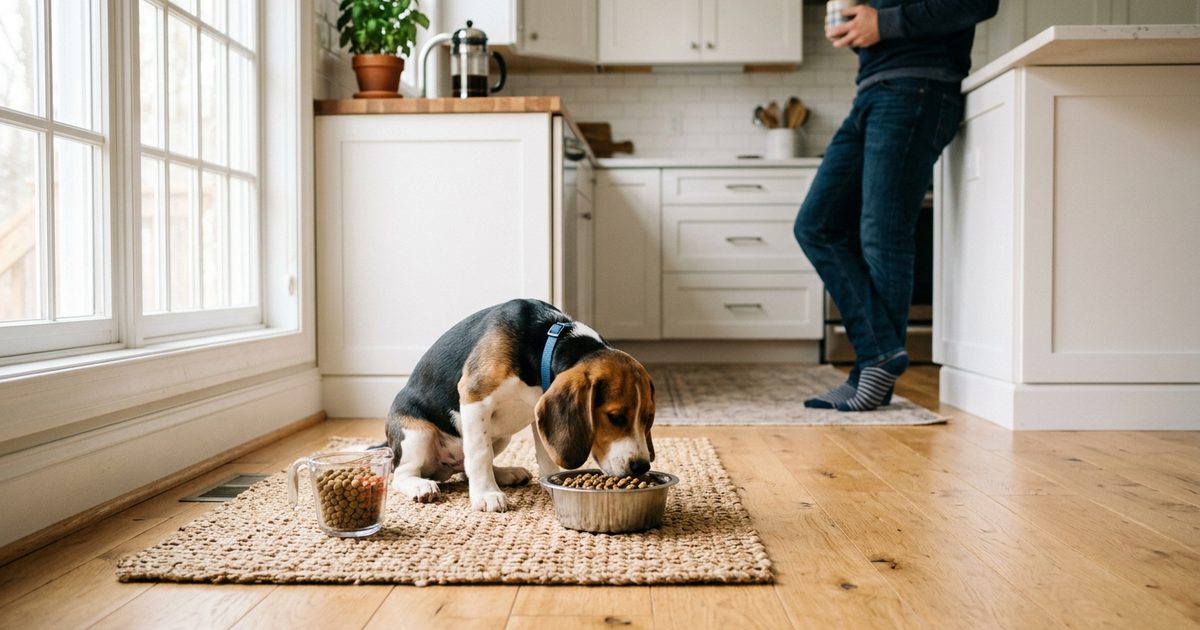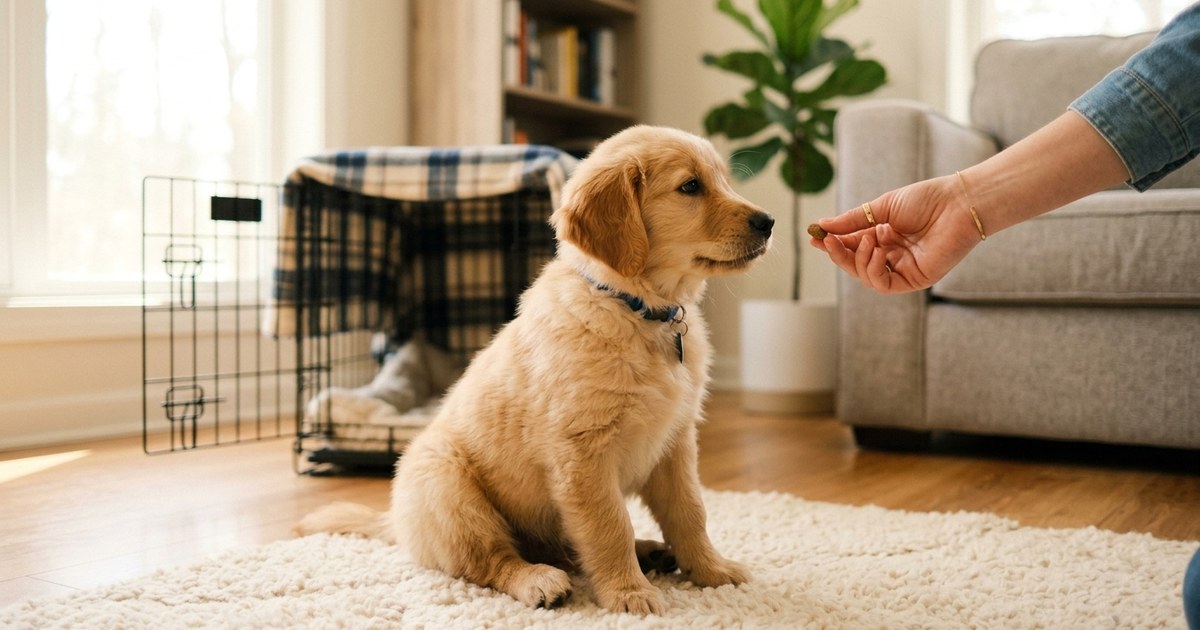
An 8 week old puppy schedule is mostly sleep, toilet trips and food, with a few minutes of play and training in between. The pattern repeats all day: wake, toilet, a little activity, toilet, nap. Below is a full day you can copy, then adjust to your clock.
Keep the order. The times can move.
What an 8 week old puppy needs from the day
Three things drive the schedule at this age.
- Sleep. The AKC says puppies usually sleep 18 to 20 hours a day, in naps that last from 30 minutes to two hours.
- Toilet trips. Humane World for Animals suggests taking a young puppy out at least every two hours. A puppy may hold their bladder for about one hour per month of age, so roughly two hours at eight weeks.
- Short, calm activity. A few minutes of play, a sniff in the yard or a tiny training game. Then rest.
If you only remember one rule: take your puppy out after they wake up, after eating or drinking, and after play.
A sample day for an 8 week old puppy
| Time | What happens |
|---|---|
| 6:30 | Wake, carry or walk straight outside to the toilet spot |
| 6:45 | Breakfast, then toilet again |
| 7:00 | Five to ten minutes of play and a one-minute name game |
| 7:15 | Toilet, then nap in the crate or pen with a chew |
| 9:00 | Toilet, short sniff in the yard |
| 9:20 | Nap |
| 11:00 | Toilet, lunch, toilet |
| 11:20 | Quiet play near you, one new sound or surface |
| 11:40 | Toilet, nap |
| 13:30 | Toilet, short training game (sit or come, one to three minutes) |
| 13:45 | Nap |
| 15:30 | Toilet, play, a calm visitor or a short car sit in the driveway |
| 16:00 | Toilet, nap |
| 17:30 | Toilet, dinner, toilet |
| 18:00 | Play and a chew on a mat near the family |
| 19:00 | Toilet, nap |
| 20:30 | Toilet, quiet time |
| 22:00 | Last toilet trip, bed in the crate |
| Night | One or two calm trips out if your puppy wakes and cries |
This is a starting point, not a test. Many 8 week old puppies need to go out between these slots. Watch for sniffing, circling or wandering off, and go out straight away.
The number of meals depends on your puppy and their food. Ask your vet or breeder, then keep the meal times the same every day. Humane World for Animals notes that a consistent feeding schedule makes housetraining easier. Our puppy feeding schedule shows how meals change with age.
Naps: the part most owners skip
An 8 week old puppy who has been awake for an hour is often an overtired puppy. Overtired puppies look full of energy. They zoom, bite hands and ignore you.
Plan a nap after every short block of activity. Put your puppy in their crate or pen with a chew in a quiet spot. The AKC suggests watching for signs of overtiredness and guiding your puppy to their crate to wind down. Our puppy sleep schedule explains how to set up naps and nights.
Toilet trips in practice
Use the same spot every time and stay with your puppy. Reward the moment they finish, then bring them back in. If nothing happens within a few minutes, go back in, keep them close or in the pen, and try again shortly.
Accidents happen at this age. Clean them up without fuss, and make the next trip sooner. The puppy potty training schedule shows how the gaps grow as your puppy gets older.
Training at eight weeks
Training at this age is short and gentle. One to three minutes is plenty.
- Name game. Say their name once, reward when they look at you.
- Sit. Lure with a piece of kibble, reward the moment their bottom touches the floor.
- Come. Crouch a few steps away, say their cue in a happy voice, reward when they reach you.
Use part of their daily food so training does not add extra calories. Our first week training plan has a day-by-day version for the first seven days.
Gentle socialization
The weeks after you bring your puppy home are a key time for socialization. The AVSAB position statement on puppy socialization describes the first three months of life as the primary socialization period.
Keep it small and positive. One new thing per play slot is enough: a calm visitor, a new surface, the sound of the vacuum from another room. Our puppy socialization checklist lists what to cover and how to keep it at your puppy’s pace. Ask your vet when your puppy can safely meet other dogs and go to public places.
Nights
Put the crate near your bed for the first nights. Your puppy can hear you, and you will hear when they need to go out.
Give the last toilet trip just before bed. If your puppy wakes and cries in the night, take them out calmly, with no play and little talking, then put them back. Expect one or two trips at first. They fade as your puppy grows. The crate training guide covers making the crate a place your puppy likes.
Alone time
An 8 week old puppy should not be left alone for long. Humane World for Animals advises that puppies under six months should not stay in a crate for more than three or four hours at a time. At eight weeks, much shorter is better.
Start with a minute in another room while your puppy chews in their pen. Come back before they get upset. If you work, plan the middle of the day before pickup: leave, working from home, or a midday visitor. Our puppy training schedule shows a weekday built around work.
Common mistakes
Too much awake time. Long play sessions end in biting and zoomies. Short activity, then a nap.
Freedom after a missed trip. A puppy loose in the house with a full bladder is where accidents happen. Use the pen.
Changing the routine every day. Same order, same toilet spot, same meal times.
Punishing accidents. It teaches your puppy to hide when they need to go, not to go outside.
When to ask a professional
Speak to your vet if your puppy needs to toilet very often, strains, has diarrhea, seems unusually sleepy or will not eat. Those can be medical. Talk to a qualified force-free trainer if biting or crying in the crate does not ease after a couple of weeks of a steady routine. The puppy biting guide covers what is normal at this age. When your puppy reaches three months, move on to the 12 week old puppy schedule.
Sources
Guidance checked on October 21, 2026: