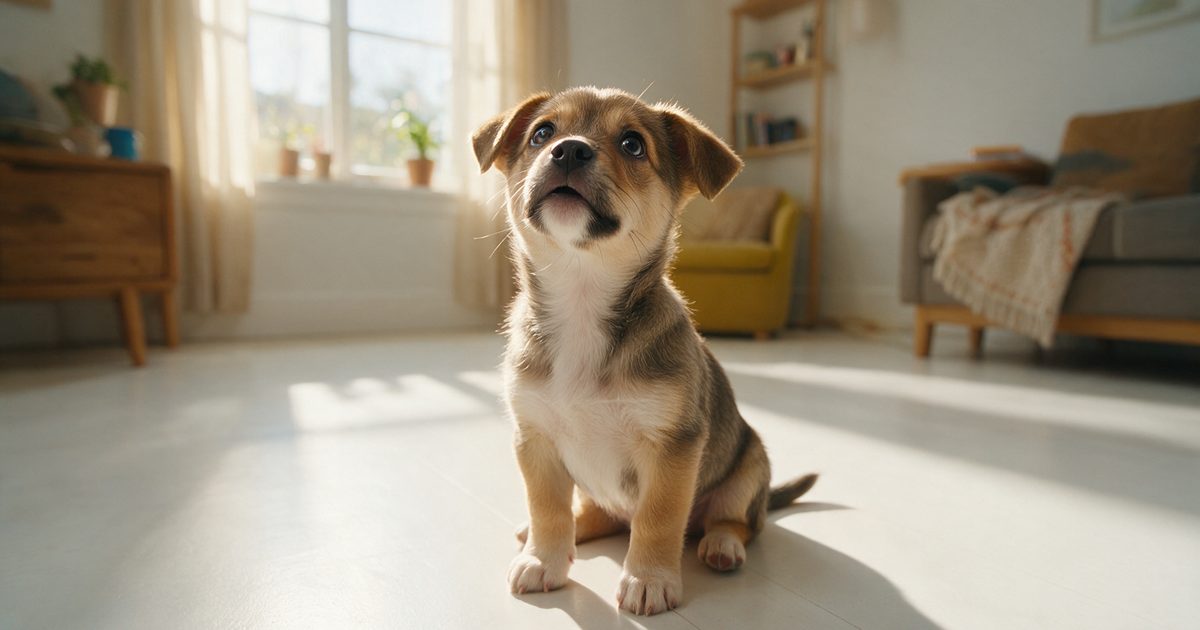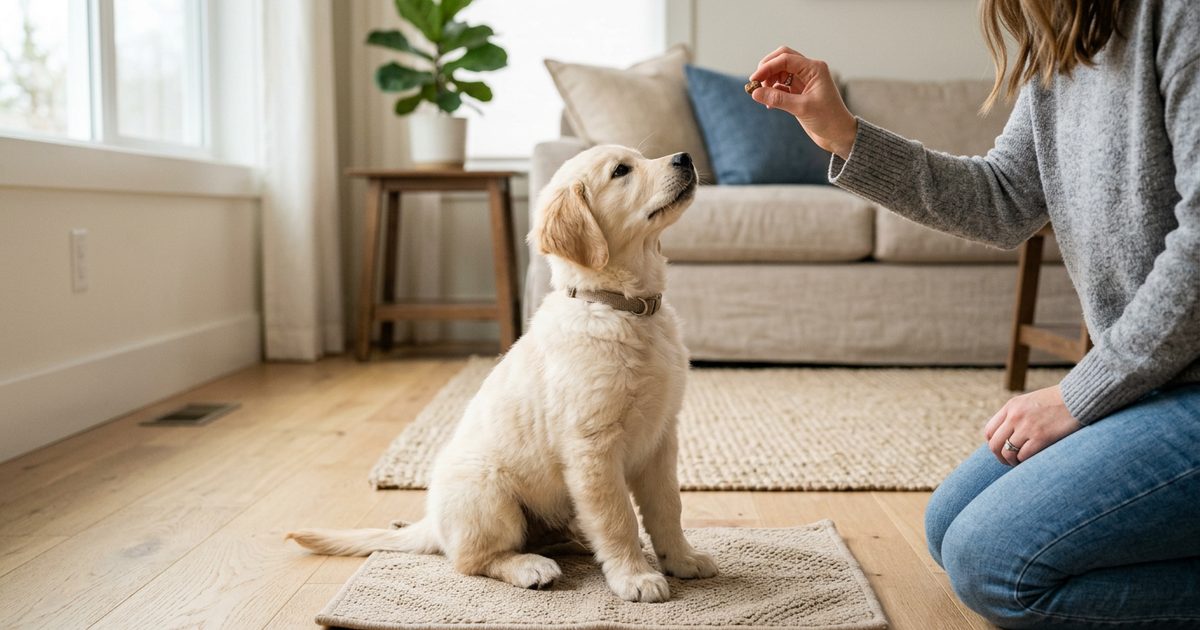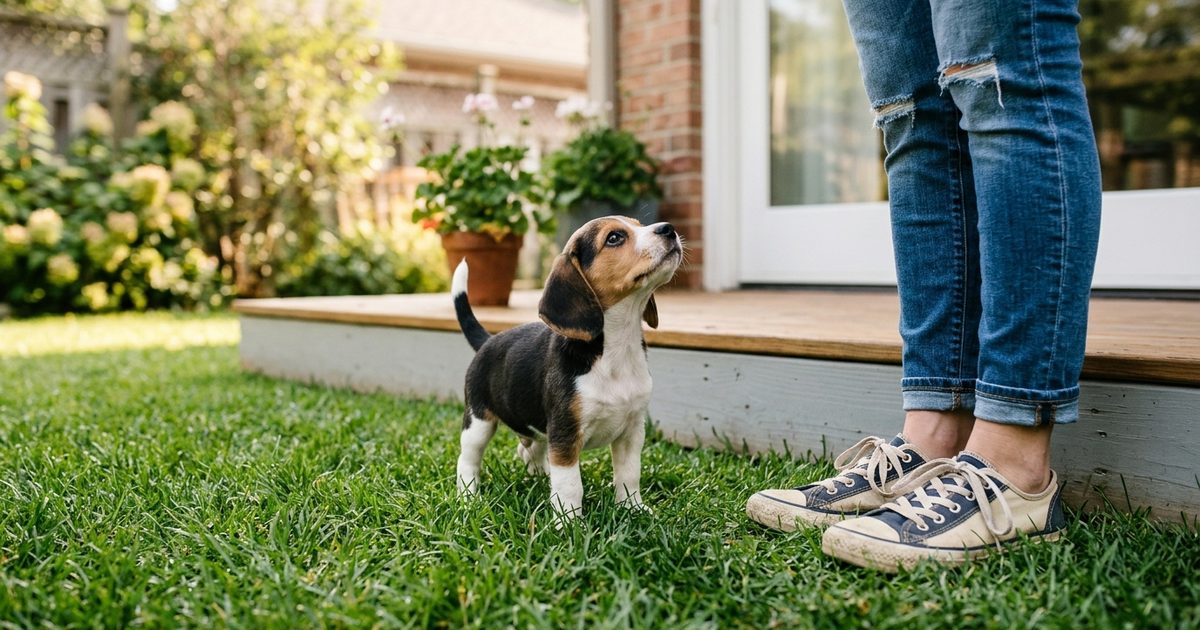
Golden Retriever puppy training uses the same force-free methods as any puppy, but the breed brings its own strengths and challenges. Most Goldens love food and people, which makes them keen learners. They also have busy mouths, lots of energy and a friendliness that turns into jumping if nobody teaches manners.
The AKC describes the Golden as an exuberant gundog with serious working roots in hunting, guiding and search-and-rescue. Train with that in mind: give them a job.
1. Give the mouth something to carry
Retrievers were bred to carry things. Mouthing is normal in every puppy, and Goldens are often especially oral. Keep toys everywhere and hand one over whenever your puppy comes to greet you. A puppy carrying a toy is not biting your sleeve.
For the day-to-day biting steps, see how to stop puppy biting.
2. Turn retrieving into training
Most Goldens love fetch, which makes it a perfect reward. Short retrieves in a hallway teach come, give and wait at the same time.
- Toss a toy a short distance.
- When your puppy picks it up, call them back happily and move backwards.
- Trade the toy for a treat, then throw again.
The trade teaches “give” without a tug of war.
3. Teach calm greetings early
A friendly ten-week-old jumping up is cute. A friendly large adult jumping up is a problem. Start now:
- Reward four paws on the floor, every time.
- Ask visitors to greet only when your puppy is calm.
- If your puppy jumps, people turn away quietly and greet again once the paws are down.
4. Use food, and a lot of it, wisely
Most Goldens are food-motivated, which makes training fast. Use part of their daily food for training so rewards do not add up to extra meals. Ask your vet about the right amount for your growing puppy.
5. Build the off-switch
Energetic puppies need to learn to rest. Practice a settle on a mat: reward your puppy for lying down calmly while you sit nearby. Give chews and food toys during quiet time. Put an overtired puppy to bed. Our puppy training schedule builds naps into the day.
6. Go easy on growing joints
Golden Retrievers are a large breed, and the breed club expects breeders to screen parents for hip and elbow problems. Ask your vet what exercise suits your puppy at each age. Sniff walks, training games and free play on soft ground are good options while they grow.
7. Socialize widely, calmly
Goldens are often social, but social is not the same as confident everywhere. Introduce new people, sounds and places calmly and from a distance at first. Our puppy socialization guide has the list and the week-by-week checklist has the order.
8. Get grooming and handling in early
Goldens have a coat that needs regular brushing. Teach your puppy that brushing, paw handling and ear checks are pleasant: a stroke of the brush, a treat, done. Short and frequent now makes adult grooming much easier.
If you are still choosing a puppy
The Golden Retriever Club of America recommends that breeders screen the parents of a litter for hip, elbow, heart and eye problems, and that results are available to puppy buyers. Ask to see the results for both parents before you commit.
Common mistakes
Letting cute become habit. Jumping, grabbing sleeves and pulling on the leash are easier to prevent than to fix later.
Endless fetch. Repetitive running is not the only way to tire a puppy. Mix in sniffing, training and rest.
Skipping alone-time practice. People-loving dogs can struggle when left. Build it up from the start.
Free-feeding. Food is your best training tool. Use it for training.
When to ask a professional
A force-free puppy class is a good idea for most Goldens, especially for greetings and practice around other dogs. Contact a certified behavior consultant or veterinary behaviorist if your puppy shows fear, guards food or toys, or struggles to be alone. Speak to your vet about limping, stiffness or reluctance to move.
Sources
Guidance checked on September 27, 2026: