Puppy training tips are everywhere, and most of them are the same five suggestions repeated. The advice in this guide is different because it centers the habits that make short sessions work: timing rewards to the second, ending while the puppy is still winning, and reading the moment a puppy is done. These are fifteen practices you can start today.
Before you start
Two mindset shifts make everything below work.
You are training all day, not in sessions. Every moment your puppy practices something - sitting for the door, chewing a toy instead of the sofa - is training. The formal sessions just label the part where you are paying attention. Carry this idea and your day becomes full of opportunities instead of a chore list.
Set the puppy up to succeed. A reliable way to make training easier is to manage the environment so the puppy rarely gets a chance to fail: gates up, shoes out of reach, a crate for when nobody can watch. Less prevention means more correction, and more correction means a confused puppy.
The 15 tips
1. Reward within one second
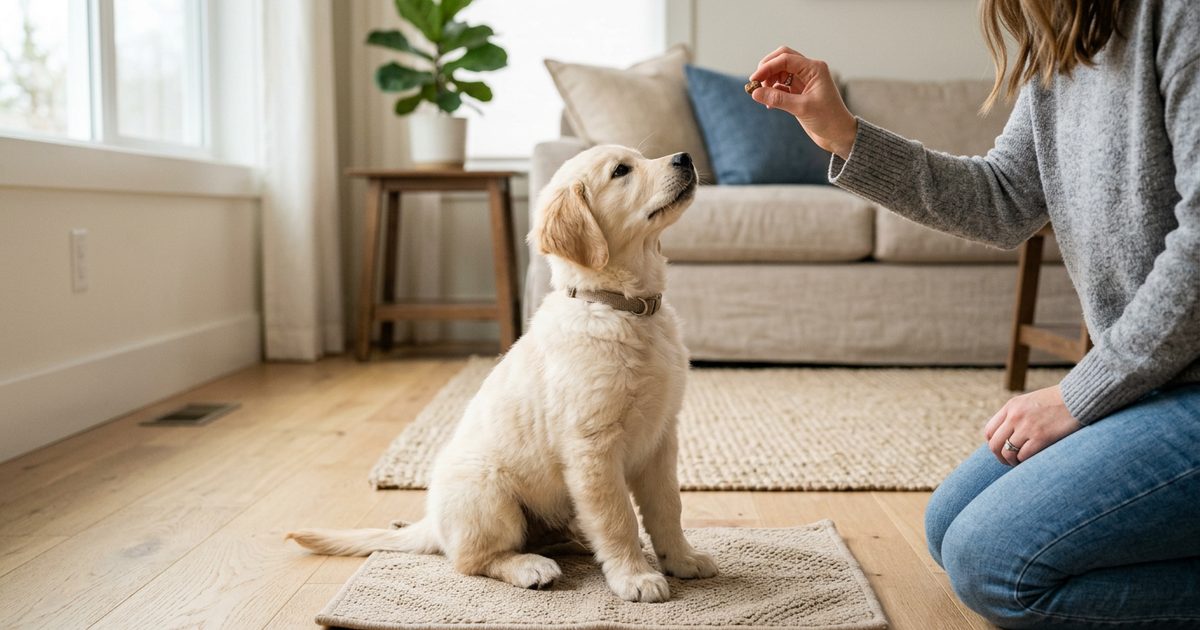
The reward has to land while the behavior is still happening, not after. A treat that arrives three seconds late teaches the puppy whatever they were doing in that third second - often turning around or sitting back down. Keep treats in your pocket or a bowl nearby so the gap between behavior and reward stays under a second. Speed beats size.
2. End on a win
Stop the session while your puppy is still succeeding, not after they start failing. Two great repetitions are a better ending than ten with three failures at the end. Puppies remember how the game felt. If every session ends with success and a treat, they come back to training eager instead of wary.
3. Learn the signs of “done”
Every puppy shows when they are finished: refusing treats they would normally take, sniffing the floor, biting the leash, suddenly getting the zoomies. When you see these, the session is over - not because the puppy is bad, but because they are tired. Ending then, calmly, is a training decision, not a surrender. An overtired puppy learns nothing and chews everything.
4. One cue, one word
Pick a word for each behavior and use it exactly, every time, from every family member. If “sit” sometimes means sit and sometimes gets repeated as “sit, sit, sit,” the puppy learns the word means “maybe, eventually.” Consistency of the word matters more than which word you choose. Write your cue list on the fridge until everyone has it.
5. Keep sessions to minutes, not hours
A young puppy’s attention span is genuinely short. Two-to-five-minute sessions, a few times a day, beat one long session every time. If your puppy is getting distracted or mouthy, that is not a sign to push through - it is the signal the session is over. Short, frequent, positive is the whole rhythm of puppy training. To fit those sessions into a day, see the puppy training schedule.
6. Say the cue once
Repeating a cue teaches the puppy to listen to the third or fifth repetition. Say the word once, wait, and if the puppy does not respond, help them do the behavior (lure, guide, show a treat) and reward. The puppy learns that the first word matters and that helping is always available. Silence after a cue is training; repeating is undoing.
7. Use real-life rewards
Treats are great, but the world is full of free reinforcers. Let the puppy out the door for sitting, throw the toy for bringing it back, open the crate for calm. Dogs repeat what works. If the puppy loves the garden and the toy and the dinner bowl, those become your training currency, and you stop being the only source of good things.
8. Reward calm, not just tricks
Most people reward obvious behaviors like sits and downs. It pays to also reward the quiet moments: the puppy lying on their mat, the puppy relaxing during a movie, the puppy settling while you cook. A treat dropped quietly next to a calm puppy teaches them that calm is a good default. This one habit can prevent more problems than many tricks.
9. Add distractions in order
Train the behavior in a boring room first, then in a slightly busier one, then outside, then with real life happening. Going straight to the park is like taking a student to the exam before the course. Each step up should be easy enough that the puppy still succeeds most of the time. If they fail, the step was too big - go back one and build again.
10. Manage instead of correct
The puppy will never need to be told off for chewing shoes that are in a closed closet, or for peeing on a floor that has a gate across it (see potty training a puppy). Management is not giving up on training - it is the part of training that removes the chance to rehearse mistakes. Set the environment so the puppy practices good behavior, and the corrections you never give are the ones that teach the most.
11. Carry treats for the first weeks
Treats in your pocket from morning to night, even on days with no formal sessions. That way every good moment can be rewarded the instant it happens: the puppy sitting at the door, the puppy stopping mid-graze, the puppy checking in on a walk. The treats run out less often than the opportunities to use them.
12. Capture behavior the puppy offers
Watch for the puppy doing the right thing on their own - sitting to greet you, lying down to settle - and reward it. Capturing what already happens teaches the puppy to offer behavior spontaneously, which is exactly what you want in real life. A puppy who sits because sitting has been rewarded a hundred times will sit before you even ask.
13. Never chase, never grab
The fastest way to destroy a recall is to chase or grab the puppy when they do not come. Once they learn that “come” ends with being caught, coming gets slower. Instead, make coming to you valuable: treat, praise, a game, then freedom again. If you must end the game, call the puppy, reward, and let them go back to playing - so coming is never the end of the fun.
14. Raise the bar slowly
Ask for a little more, not a lot more. The sit that works in the kitchen should be practiced at the door, then in the yard, then at the gate, then with a visitor. Each raise should be a step the puppy can almost always succeed at. The puppy obedience training guide turns this into six short daily blocks. Fast progress feels good, but slow progress sticks. If the puppy fails twice in a row, the bar was too high - make the next step easier.
15. Keep a mini training log
Five lines a day: what you practiced, where, what the puppy did, what you rewarded. After a week you will see the pattern - the cue that is solid, the place where it falls apart, the time of day when the puppy is freshest. A written log lets you train on data rather than on the vague feeling that it is going fine.
Common mistakes
Training too long. One session stretched to twenty minutes teaches an overtired puppy to stop listening. End while it is fun.
Rewarding late. The gap between behavior and treat is everything. Late rewards teach the wrong behavior.
Repeating cues. Every repeat teaches the puppy to wait for the fifth “sit.” Say it once, help, reward.
Skipping management. Letting the puppy rehearse mistakes all day, then expecting short sessions to undo them. Prevent first.
Comparing to other puppies. Puppies learn at different paces. The comparison that matters is to your puppy last week, not to someone else’s puppy today.
When to ask a professional
A qualified force-free trainer is worth bringing in early if your puppy’s behavior is driven by fear - hiding, freezing, panicking at ordinary things - rather than by normal puppy energy. Training tips are not the answer to fear, and pushing through it makes it worse. Speak to your vet first if your puppy is unusually sleepy, stops eating, or suddenly changes behavior, because that can be a health question, not a training one.
For everyday puppy skills, steady practice matters more than a special method. Our new puppy checklist covers the home setup for the first weeks, and the first-week training plan shows how to start training day by day.
Sources
Guidance checked on September 2, 2026: