A puppy feeding schedule is simple: several measured meals at the same times every day, fewer meals as your puppy grows. The AKC timeline is four meals a day from 6 to 12 weeks, three meals sometime between 3 and 6 months, and two meals from 6 to 12 months. How much goes in each bowl is a question for the food label, your puppy’s body condition and your vet.
Below: meals by age, sample meal times, how to judge portions and how the schedule helps with training and housetraining.
How many meals a day, by age
| Age | Meals a day (AKC timeline) |
|---|---|
| 6 to 12 weeks | 4 |
| 3 to 6 months | drop from 4 to 3 at some point in this window |
| 6 to 12 months | 2 |
| Adult | most owners split the daily amount between 2 meals |
PetMD gives a similar picture: puppies under three months may need three to four meals a day, and many can move to two meals between six and twelve months.
Small and giant breeds can need a different plan. Ask your vet or breeder before you change the number of meals.
Sample meal times
Pick times you can keep every day, including weekends. Then build toilet trips around them.
Four meals (8 to 12 weeks): 7:00, 11:00, 15:00, 18:30.
Three meals (about 3 to 6 months): 7:00, 12:30, 18:00.
Two meals (6 months and older): 7:00 and 18:00.
Take your puppy out right after each meal. Humane World for Animals notes that a consistent feeding schedule makes housetraining much easier. Our puppy potty training schedule lines up toilet trips with meals by age.
If you want the whole day mapped out, the 8 week old puppy schedule and the 12 week old puppy schedule show meals, naps and toilet trips together.
How much to feed
We do not give portion sizes here, because the right amount depends on your puppy’s food, breed, size and body condition.
- Start with the label. The feeding chart on the food is a starting point. PetMD notes these charts are often not exact.
- Watch the dog, not the dish. The AKC says body condition, not how much your puppy eats or leaves, should guide portions.
- Ask your vet. They can check body condition at each visit and adjust the plan. This matters most for large and giant breeds.
- Measure every meal. Use the same cup or a kitchen scale so changes are deliberate.
Measured meals, not free feeding
Leaving food down all day makes it hard to know how much your puppy eats, and harder to predict toilet trips. PetMD says measured meals are the most effective way to feed growing puppies. The AKC suggests not leaving food down for more than 15 minutes.
Put the bowl down, give your puppy time to eat in peace, then pick it up.
Treats and training
Food is your best training tool. Use it, but count it.
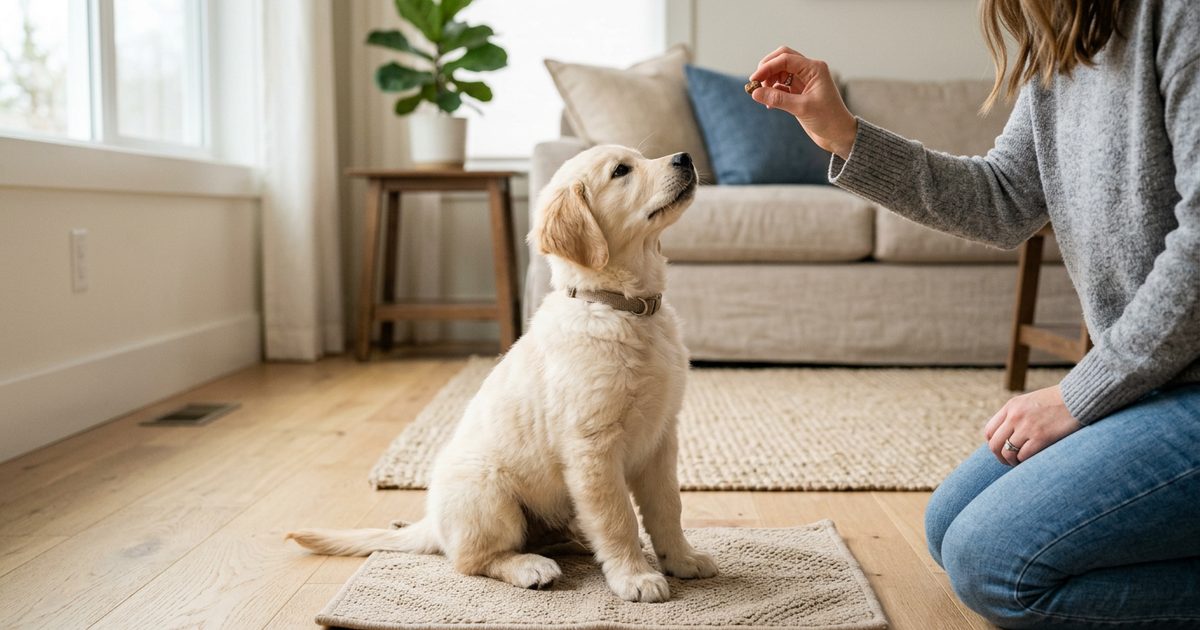
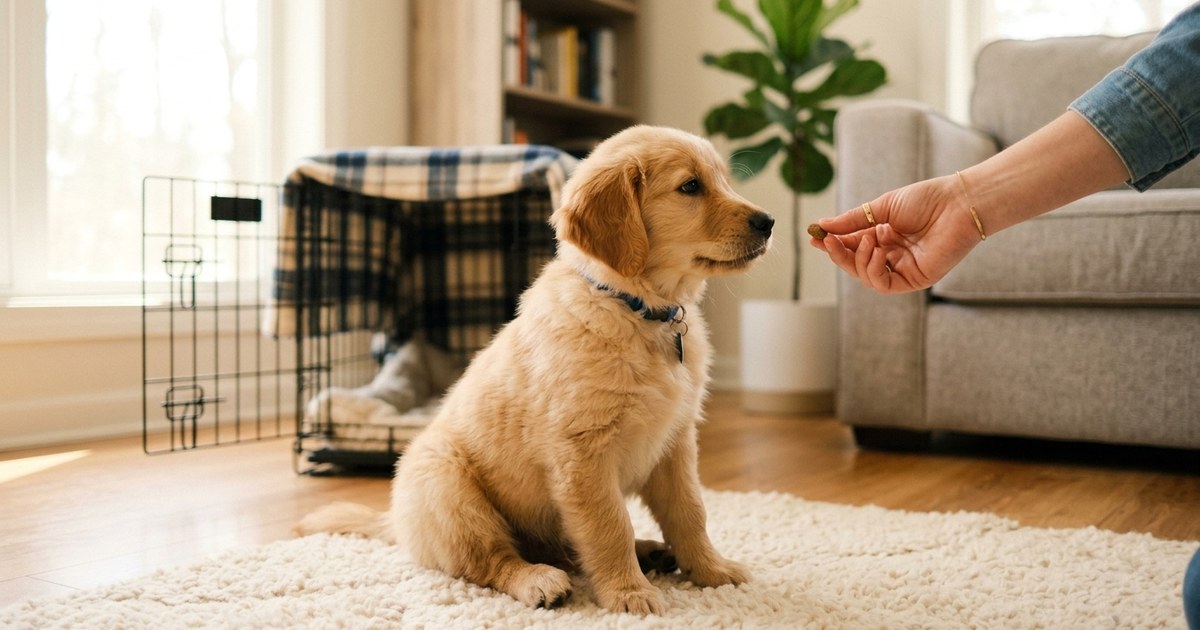
- Take part of each meal’s kibble and use it for a short training session before the meal.
- Keep treats tiny. The AKC advises keeping training treats as small as possible.
- Reduce meal portions on days you use a lot of treats.
A puzzle feeder or snuffle mat turns part of a meal into enrichment. Our dog enrichment ideas has easy ways to do that with regular food.
Switching to adult food
The AKC says small-breed puppies can switch to adult food at around 7 to 9 months, while larger breeds may take until 12 to 14 months. Change gradually over a few days to avoid an upset stomach. When in doubt, stay on puppy food a little longer. Ask your vet for the right timing for your puppy.
Common mistakes
Changing meal times every day. Toilet trips become unpredictable and accidents go up.
Feeding by the bowl. A puppy who finishes everything is not always hungry. Judge by body condition.
Forgetting the treats. Training treats add up. Count them in.
A late dinner. Feed early enough for a toilet trip before bed.
Switching foods suddenly. Mix the new food in gradually.
When to ask your vet
Call your vet if your puppy stops eating, vomits, has diarrhea, seems weak, or looks too thin or too heavy. Ask before changing the number of meals for very small or giant breed puppies, and before adding new foods or supplements. This guide covers routine, not nutrition advice for your individual puppy.
Sources
Guidance checked on October 21, 2026: