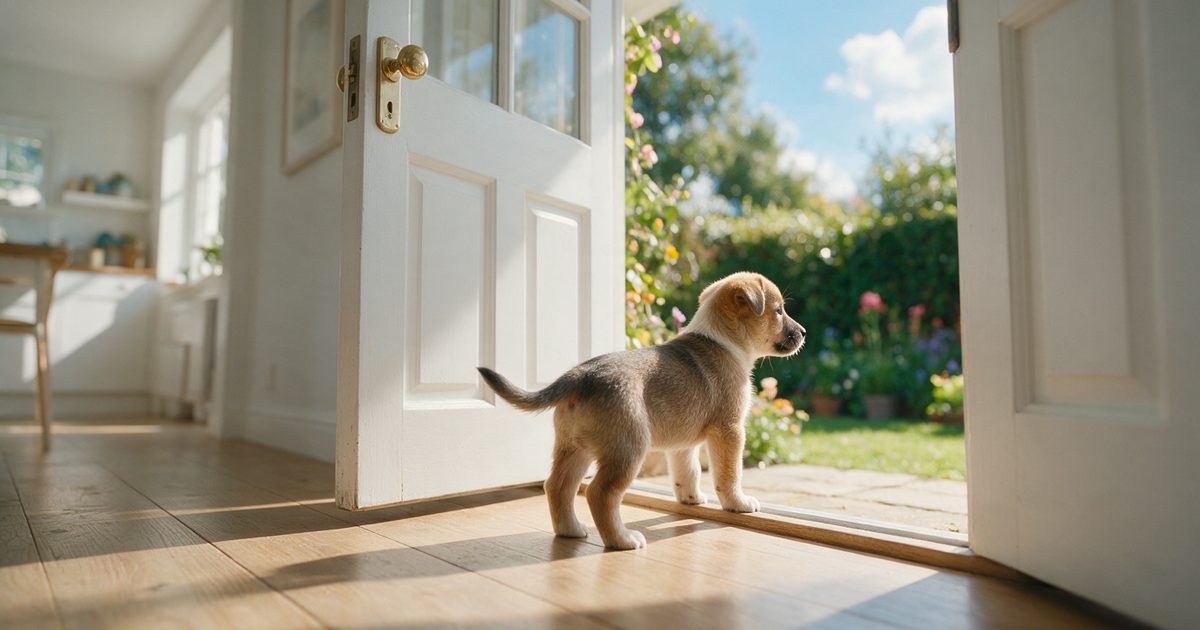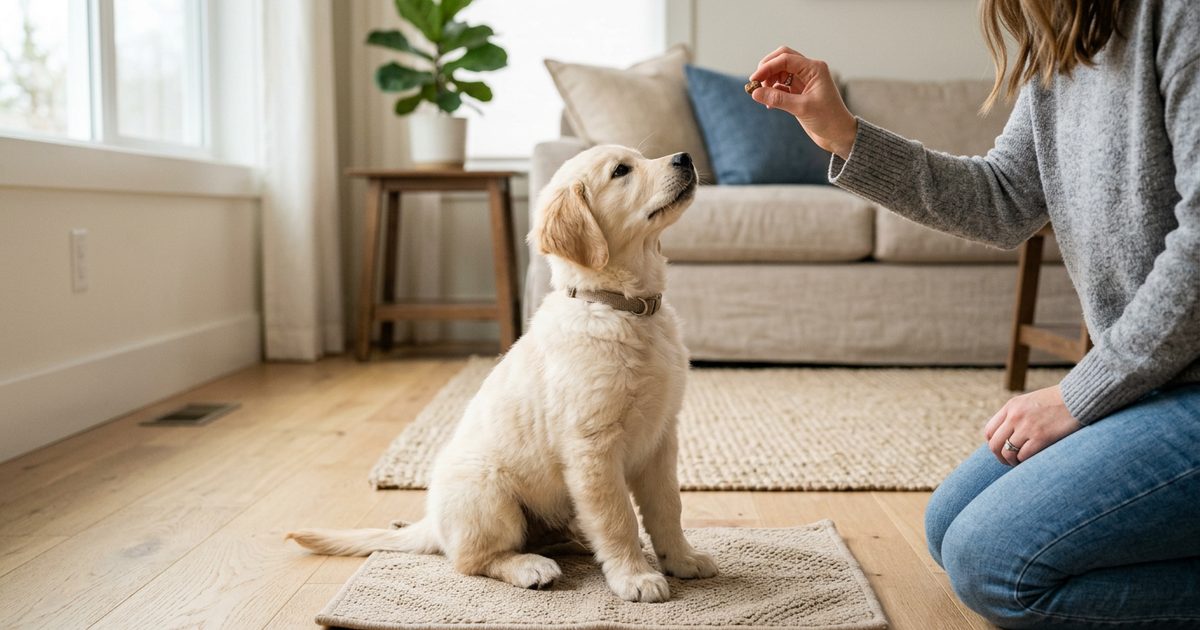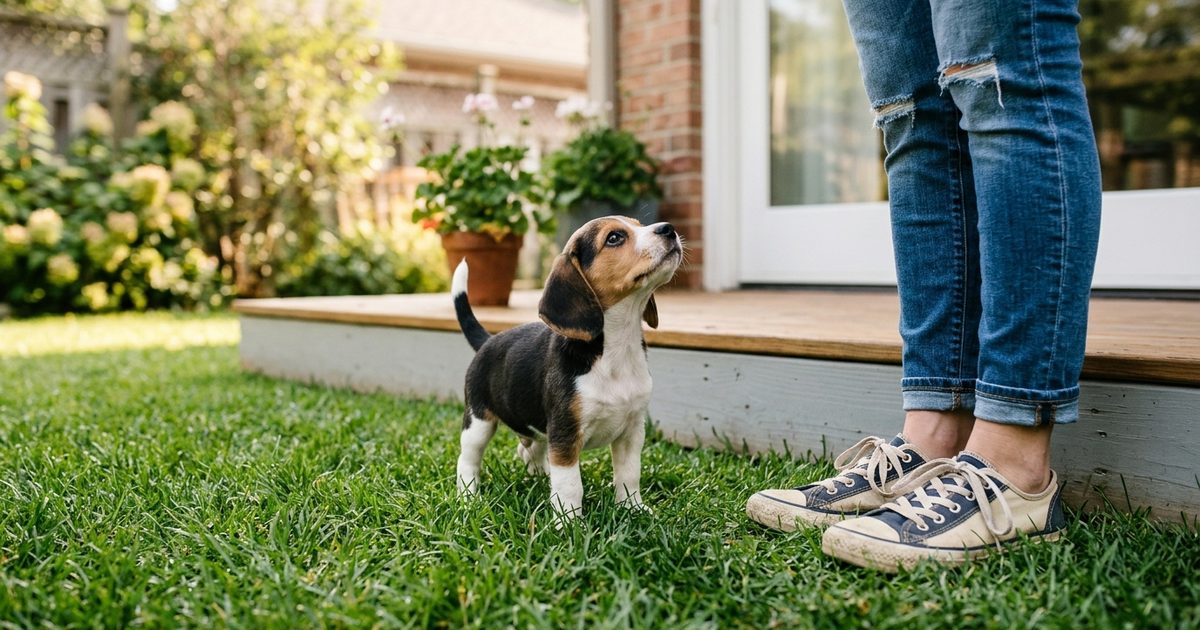
A puppy potty training schedule works because puppies are predictable. They need to go after waking, after eating or drinking, after play, and at fairly regular intervals in between. Put trips at those moments, reward success outside, and most accidents simply do not happen.
This page gives a schedule for three ages and shows how to adjust it using what your puppy actually does. For the broader method, see our potty training puppy guide.
The two rules behind the schedule
Trigger trips. Go out straight after your puppy wakes up, after meals and drinks (set meal times help, see our puppy feeding schedule), after play and after any excitement, such as visitors.
Timer trips. Between triggers, go out on a timer. Humane World for Animals suggests at least every two hours for young puppies, and notes a puppy may be able to hold their bladder for about one hour for every month of age. That rule of thumb is a maximum for resting time, not a target for awake time.
8 to 10 weeks
| Moment | Trip |
|---|---|
| Wake up in the morning | straight out, carry if needed |
| After breakfast | within a few minutes |
| After every nap | straight out |
| After play or training | straight out |
| While awake | about every 30–60 minutes |
| Last thing at night | as late as you can |
| Night | when your puppy wakes and cries |
At this age, supervision does most of the work. If you cannot watch your puppy, they should be in a crate or pen. Our crate training guide covers how to set it up.
12 weeks
| Moment | Trip |
|---|---|
| Wake up, after meals, naps and play | straight out |
| While awake | about every 1–2 hours |
| Evening | an extra trip after the evening play burst |
| Night | many puppies need one trip, some none |
Your puppy can usually manage a bit longer between trips now. Keep the trigger trips exactly as before. For the rest of the day, see the daily puppy schedule.
16 weeks and beyond
| Moment | Trip |
|---|---|
| Wake up, after meals, naps and play | straight out |
| While awake | about every 2–3 hours |
| Night | often none, but let your puppy wake you if needed |
Freedom in the house can grow, one room at a time, as long as accidents stay rare. For the whole day by age, not just toilet trips, see the puppy training schedule by age.
Keep a toilet log for a week
Write down the time of every pee, poop and accident. After three or four days, patterns appear: the puppy who always goes twenty minutes after breakfast, the evening accident after play. Move trips to match.
A log also shows real progress. It is easy to feel stuck when the last accident is the only thing you remember.
What a good trip looks like
- Take your puppy to the same spot, on a leash if needed.
- Stand still. Let them sniff. Stay quiet and boring.
- The moment they go, say “yes” and give a treat right there, not back at the door.
- Then play or a short walk, if you like. Fun comes after the toilet, not before.
- If nothing happens within a few minutes, go back in, put them in their pen, and try again shortly.
When accidents happen
Clean it well, with an enzyme cleaner if you can, so the smell does not invite a repeat. Humane World for Animals advises never punishing accidents: scolding or rubbing a puppy’s nose in it only makes them fearful and slows progress.
Then look at the log. Most accidents mean a trip came too late or your puppy had too much freedom too soon.
Common mistakes
Going by signals only. Many puppies give very little warning. The timer catches what you would miss.
Rewarding at the door. By then your puppy has forgotten what the treat was for. Reward in the spot.
Long play outside before the toilet. Your puppy learns that going ends the fun. Toilet first.
Stretching gaps after one good day. Wait for several good days.
When to ask your vet
Talk to your vet if your puppy strains, pees very often or in tiny amounts, has blood in their urine or stool, drinks much more than usual, or starts having accidents after being reliable. Those can be medical problems, and no schedule will fix them.
Sources
Guidance checked on September 27, 2026: