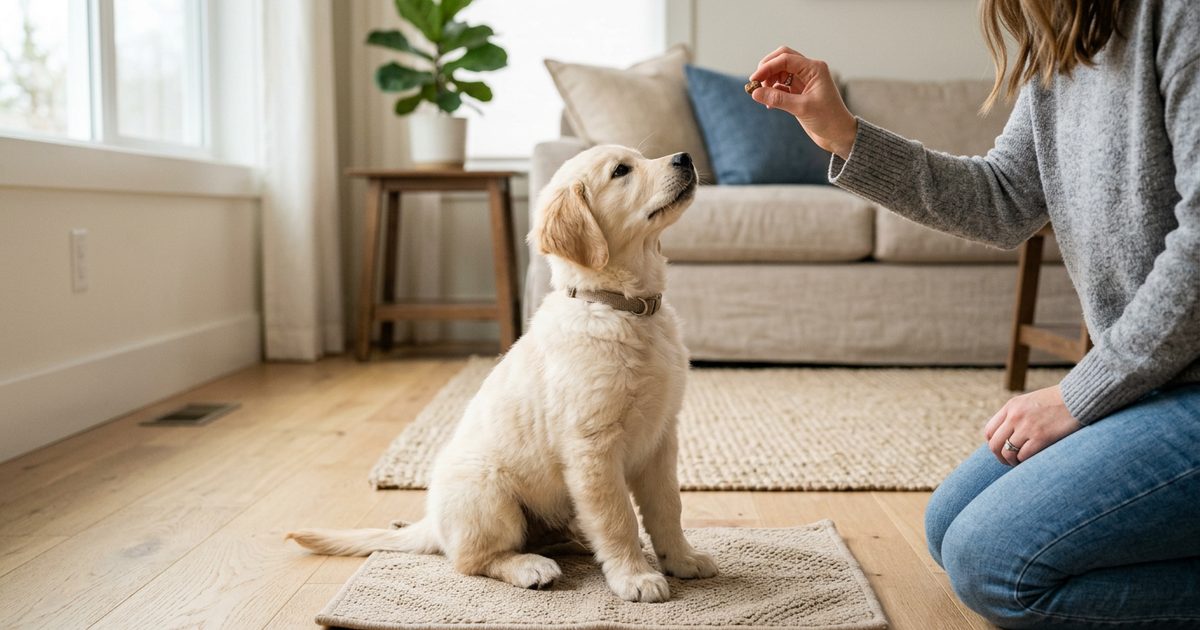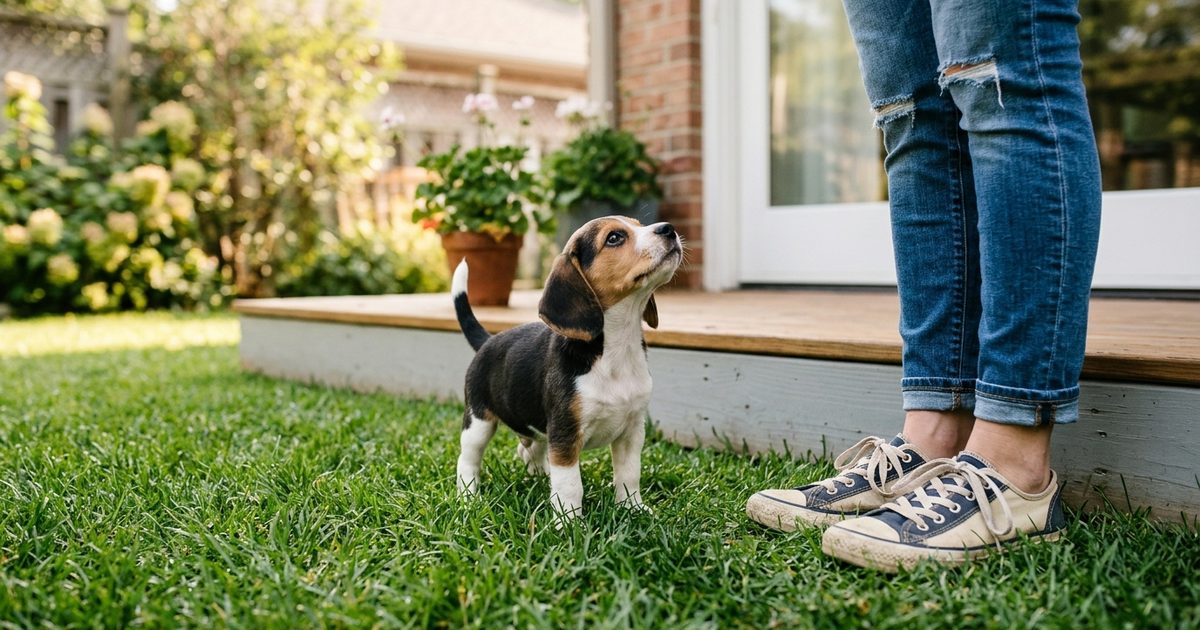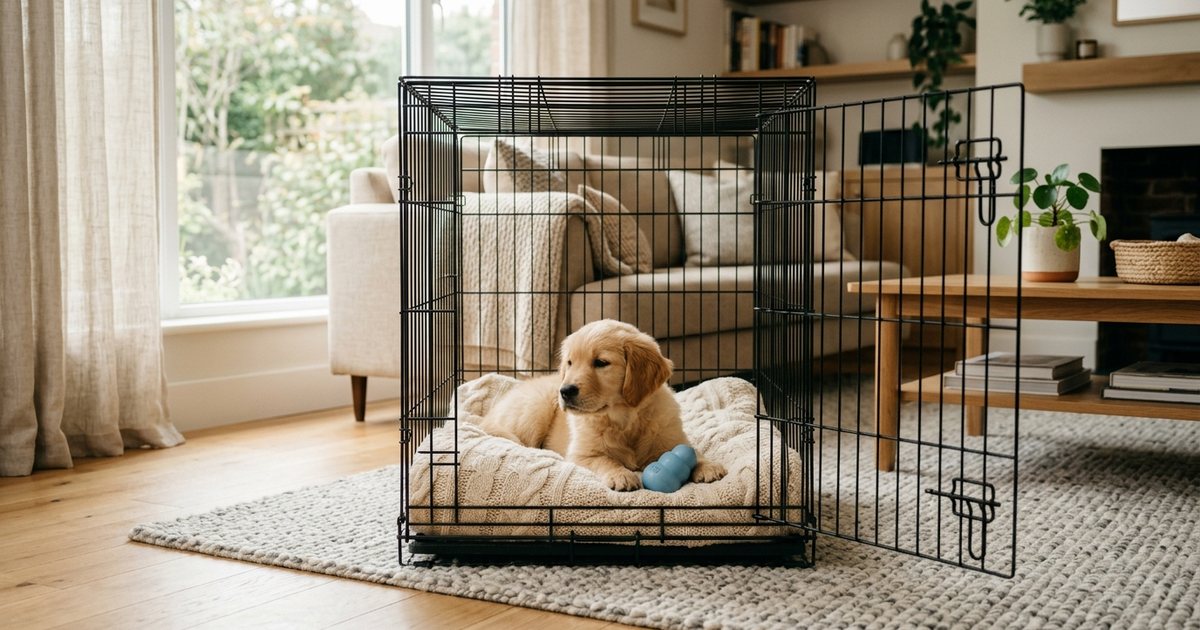
The best dog enrichment ideas for a puppy use the things puppies already love to do: sniff, chew, forage and figure things out. A few of these a day often means less biting, less chewing of furniture and a puppy who settles more easily.
Most of the ideas below use your puppy’s regular food and things you already have at home. The ASPCA’s rule applies to every one of them: supervise closely while DIY items are out, and take away anything your puppy tries to swallow.
Why enrichment matters for puppies
VCA describes environmental enrichment as changing how a pet lives to increase physical activity and typical behaviors, and notes that enrichment can reduce stress and keep pets mentally engaged. The ASPCA puts it more bluntly: bored dogs will find their own ways to enrich themselves, usually with your shoes.
For puppies, enrichment also gives a busy mouth somewhere to go. That makes it one of the most practical tools against puppy biting.
Food and foraging
1. Scatter feeding
Scatter part of a meal on the lawn or a clean floor. Your puppy sniffs out every piece. Simple and very calming.
2. Snuffle mat
A snuffle mat is a mat with fabric strips or loops. Hide kibble in it and let your puppy nose it out. Use small, dry pieces so the mat stays clean.
3. Muffin tin puzzle
Put kibble in a muffin tin and cover some of the cups with tennis balls or toys. The ASPCA lists it as an easy DIY puzzle. Start with most cups uncovered.
4. Paper roll parcels
Put a few pieces of kibble inside an empty toilet paper roll and fold the ends. Your puppy unfolds or tears it open. Supervise, and clear up the cardboard afterwards.
5. Box in a box
Hide a few treats in a small box, put it in a bigger box, and let your puppy work their way in. Again, supervise and tidy up.
6. Stuffed food toy
Fill a rubber food toy with part of a meal, softened with a little water. Easy fillings first. Once your puppy is good at it, some owners freeze it for a longer challenge.
Nose work
7. Find it
Show your puppy a treat, say “find it” and toss it a short distance. Then hide it just behind a chair leg. Build up to treats hidden around a room.
8. Cup game
Put a treat under one of three cups. Let your puppy sniff and knock over the right one. Easy at first: one cup, then two, then three.
9. Sniff walks
On walks, let your puppy sniff. A slow walk where your puppy explores smells is enrichment, not a failed walk. Keep it short for young puppies. For other new sights and sounds, see puppy socialization.
Chewing and calm
10. Rotating chews
Keep a few safe chews and rotate them so they stay interesting. Offer one at the times your puppy usually gets bitey, such as during your dinner.
11. Settle mat with a chew
Put a mat near you, give a chew on it, and reward your puppy for lying there. It builds calm and a place to go when the house is busy. Our puppy training tips explain more about rewarding calm.
Movement and problem-solving
12. Mini obstacle course
The ASPCA suggests an indoor agility course from furniture and household items. For puppies keep it low and gentle: walk over a flat board, step through a hula hoop on the floor, go around a cushion. No jumping on growing joints.
A simple enrichment day
- Breakfast: part in a snuffle mat, part for training.
- Midday: a short find-it game.
- Afternoon: a sniff walk or yard exploration.
- Evening: a stuffed food toy while the family eats.
That fits easily into our daily puppy training schedule.
Safety first
- Supervise every DIY game and put materials away afterwards.
- Use part of your puppy’s daily food to avoid overfeeding.
- VCA lists foods to avoid in enrichment, including chocolate, grapes, raisins, xylitol and onions.
- Check toys and chews for damage and remove small pieces.
- Ask your vet before adding new foods or chews.
Common mistakes
Puzzles that are too hard. Frustration is not enrichment. Make it easy, then harder.
Leaving DIY toys out. Cardboard, fabric and paper are for supervised games only.
Only physical exercise. A tired body and a bored brain is still a restless puppy.
Always the same toy. Rotate so things stay new.
When to ask a professional
Talk to a certified behavior consultant or veterinary behaviorist if your puppy guards food toys or chews, becomes frantic with food, or cannot settle even with plenty of activity. Speak to your vet if your puppy swallows something they should not.
Sources
Guidance checked on September 27, 2026: