The first week with a puppy is not about perfect obedience. It is about teaching your puppy that home is safe, that good things happen when they do the right thing, and that the day follows a pattern. Start puppy training with those three ideas and everything else gets easier. The first thing to train is the routine; the first skill is your puppy’s name.
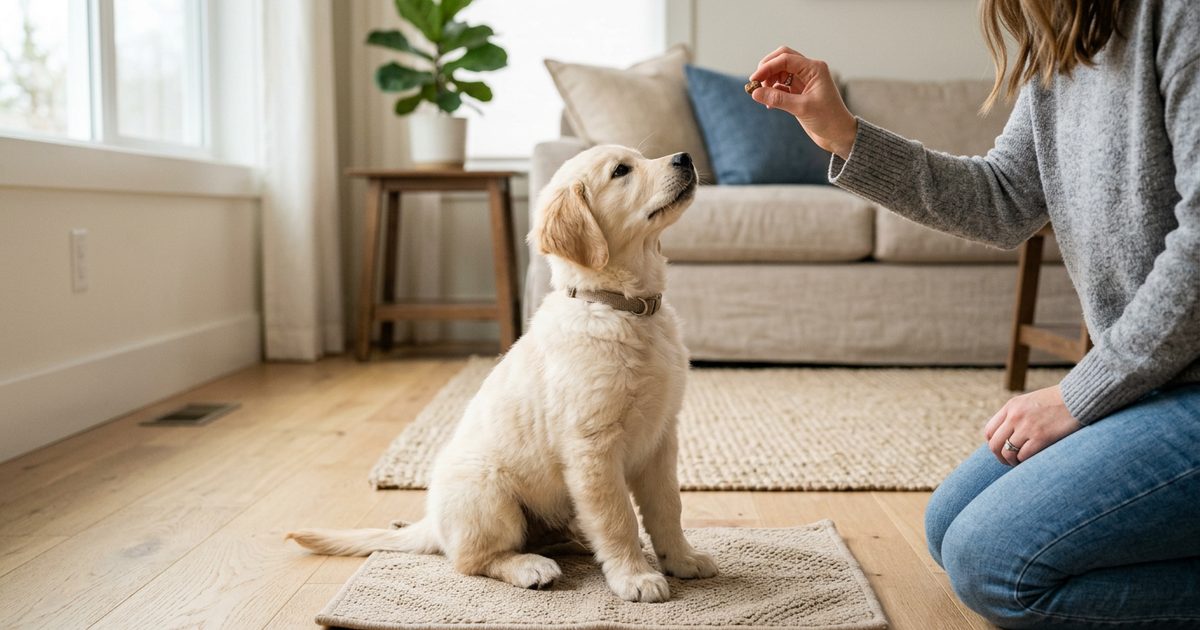
This plan gives each day one main job. Keep sessions to one to three minutes, use soft pea-sized treats, and stop while your puppy still wants more. VCA advises that early training sessions should be short and use praise and food rewards.
Before day one
- A puppy-safe room or pen where you can supervise or contain your puppy.
- A crate or bed in a quiet place, introduced with the door open. See our crate training guide.
- Small treats, a collar or harness that fits, chew toys and a toilet spot outside.
- A vet visit booked for an early check and advice on vaccinations and safe places to go. Use our new puppy checklist for what to have ready.
Day 1: settle in and learn the toilet spot
The job today is simple: let your puppy look around, rest a lot and learn where to toilet.
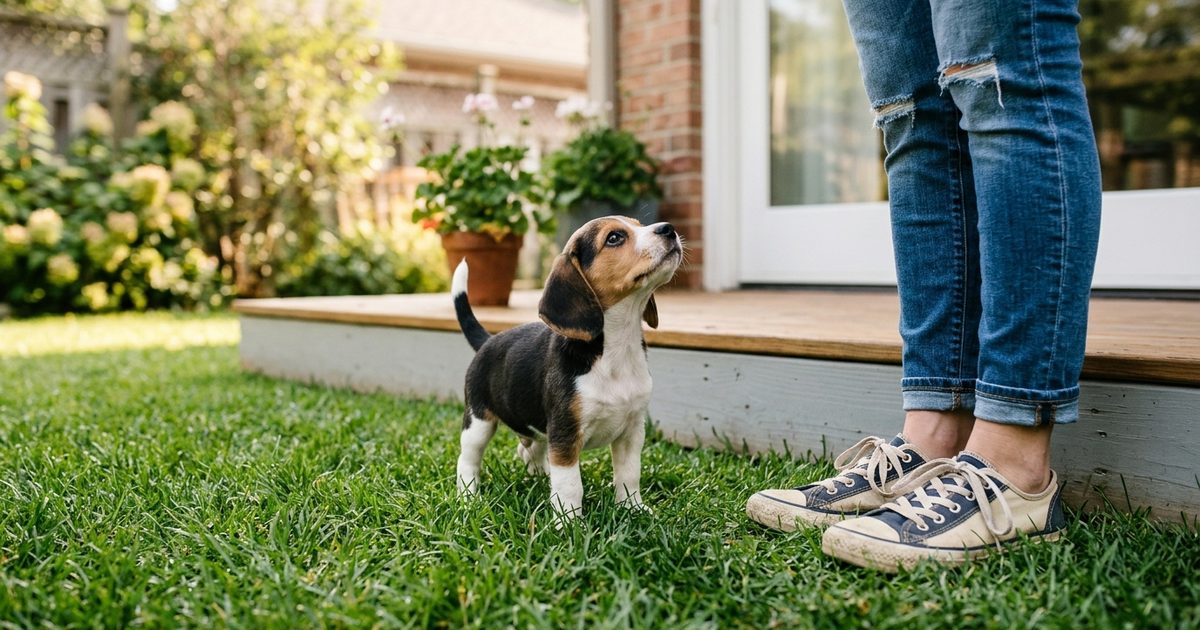
- Carry or lead your puppy to the same outdoor spot after waking, eating, drinking and play. Wait calmly. Reward right after they finish.
- Let your puppy sleep. Young puppies need a lot of rest. Our puppy sleep schedule shows how to plan naps.
- Keep visitors few and quiet.
The potty training schedule shows how often to go out at different ages.
Day 2: the routine
Write a simple day and repeat it: wake, toilet, breakfast, play, toilet, nap, repeat. Predictability helps a puppy relax. The 8 week old puppy schedule has a full day with clock times.
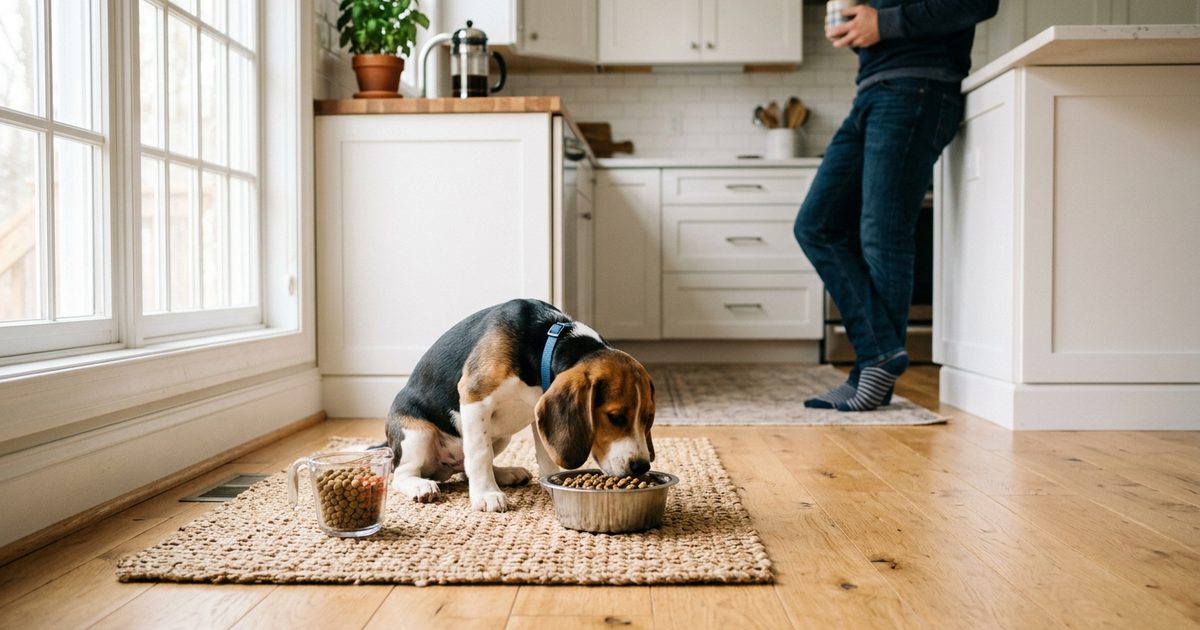
- Feed at the same times.
- Take your puppy out about every hour when awake, and straight after sleeping or eating.
- Start a toilet log. It shows patterns you would otherwise miss.
For a full-day layout, see the daily puppy training schedule.
Day 3: the crate and the sleeping place
- Toss treats into the crate so your puppy walks in by choice. Leave the door open at first.
- Feed a meal in the crate once your puppy is comfortable.
- Close the door for a few seconds while your puppy chews something tasty, and open it before they fuss.
Never use the crate as a punishment. Follow the steps in our crate training guide and the crate schedule for nights.
Day 4: name and attention
- Say your puppy’s name once in a cheerful voice. When your puppy looks at you, say “yes” and give a treat.
- Practice for a minute, three times a day, in quiet places.
- Do not use the name to call your puppy for things they dislike.
Day 5: gentle handling
- Touch a paw, an ear, the collar or the back for a second, then reward.
- Build from one second to a few seconds over days.
- Stop if your puppy pulls away. Go back to an easier step.
This prepares your puppy for vet visits, grooming and nail trims.
Day 6: sounds, surfaces and calm meetings
- Let your puppy walk on different floors and surfaces at home, with treats.
- Play recordings of everyday sounds quietly, then reward calm behavior.
- Keep new experiences positive and short. The socialization checklist lists safe ideas, and the socialization guide explains the why. AVSAB advises that puppy socialization should begin early, in a safe, controlled way.
Day 7: first cues and review
Now add one or two simple skills:
- Sit: hold a treat above the nose and move it back until the bottom lowers. Say “yes” and reward.
- Come: say the name, step back, reward your puppy for coming to you.
Review the week. Was the routine easy to keep? Did toilet trips line up with sleep and meals? Adjust before you add anything new. Then move on to the puppy obedience training blocks.
Mistakes to avoid in week one
Doing too much. One idea per day is plenty.
Punishing accidents. It makes puppies hide, not learn. Clean up and adjust the schedule.
Skipping rest. Overtired puppies bite, whine and cannot learn. See how to handle it in stop puppy biting.
Waiting for “real” training. Everything you do this week is training.
When to ask for help
Call your vet if your puppy refuses food, has diarrhea or vomiting, or seems unwell. Speak to a qualified force-free trainer if you are overwhelmed or the routine will not come together. For fear that does not settle, or growling and snapping, ask a veterinary behaviorist or certified behavior consultant.
Sources
Guidance checked on October 4, 2026: