Puppy training is not one skill. It is a routine, a handful of first behaviors, and a way of rewarding your puppy that you repeat every day. The good news: you do not need to teach everything at once. This page gives you the order, so you always know what to work on this week and what can wait.
Every guide on this site uses force-free, reward-based methods. That is not a style choice. Leading veterinary behavior organizations recommend reward-based training and advise against punishment because it can increase fear and aggression.
The first week: routine before commands
The fastest progress in the first week does not come from teaching sit. It comes from a predictable day.
- Toilet trips on a timer, not only when your puppy looks restless. Our potty training guide has the details.
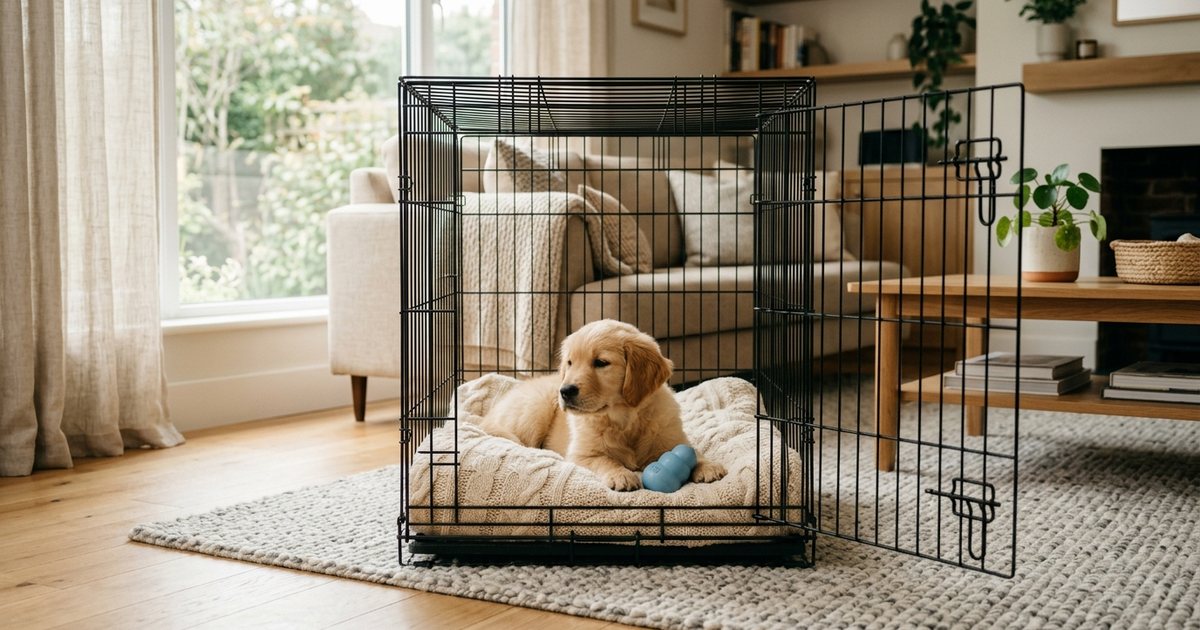
- A safe resting place, such as a crate or playpen, introduced slowly. See crate training for puppies.
- Meals at set times. Regular meals make toilet timing easier to predict.
- Plenty of sleep. An overtired puppy bites more and listens less.
If you are still setting up the house, start with the new puppy checklist and come back here.
How your puppy actually learns
A puppy repeats what pays off. That is the whole system. Your job is to make the right choice easy and worth it, and the wrong choice hard or unrewarding.
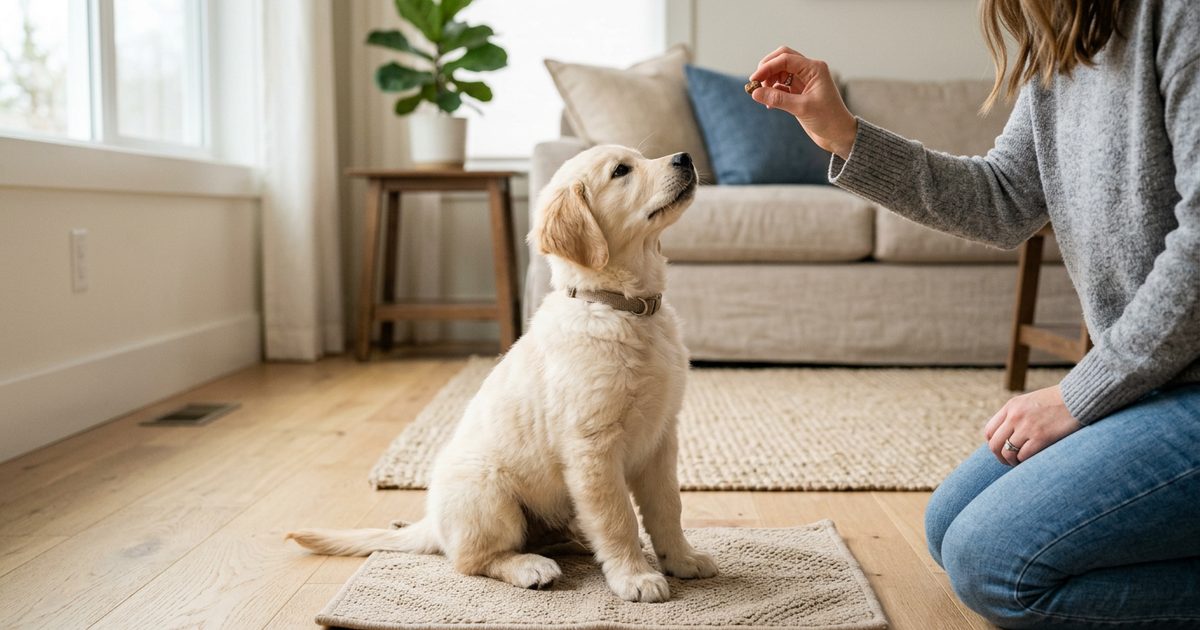
Reward the moment it happens. A treat three seconds later rewards whatever your puppy is doing three seconds later. Mark the right moment with a short word like “yes”, then deliver the food.
Keep sessions short. A few minutes, several times a day. End while your puppy still wants more.
Change one thing at a time. If you add distance, keep the room quiet. If you move to the yard, make the task easier again.
Manage what you cannot train yet. Baby gates, a leash indoors and a tidy floor prevent the mistakes you have no time to fix today.
The first skills to teach
These are the behaviors that make daily life easier. Teach them in roughly this order.
- Name response. Say your puppy’s name once, reward the moment they look at you.
- Sit. Lure it with a treat above the nose, then fade the lure to a hand signal.
- Come. Start two steps away in a quiet room. Always make coming to you the best thing that happened all day.
- Down. Lure or wait for it and reward. A settled down is the base for calm behavior later.
- Settle on a mat. Reward your puppy for choosing to lie on a mat while you sit nearby.
- Leave it. Teach your puppy that ignoring one thing earns something better.
- Loose leash walking basics. Reward your puppy for being next to you, indoors first.
Our puppy obedience training guide breaks these into short daily blocks.
The big three problems, and where to fix them
Most first-time owners hit the same three problems in the first months. Each one has its own page.
Accidents indoors. This is a schedule problem more often than a puppy problem. Use a potty training schedule by age and adjust it from what you see.
Biting hands and clothes. Normal, frustrating and fixable. Most of it is overtiredness and play that got too exciting. See how to stop puppy biting.
Crying in the crate. Usually the crate arrived too fast. Go back a step. Our crate training schedule shows a gentler pace for day and night.
Socialization runs alongside everything
AVSAB describes the first three months of life as the most important time for puppy socialization: puppies accept new things more readily then than they will later. That makes calm, positive exposure to people, sounds, surfaces and handling one of the most valuable things you can do in the first months.
Socialization does not mean meeting everyone. It means noticing new things and staying relaxed. Our puppy socialization guide lists what to introduce, and the week-by-week checklist shows when.
A simple weekly plan
You do not need a spreadsheet. You need a short list you can actually keep.
- Every day: toilet schedule, meals, naps, two or three short training sessions, a little calm novelty.
- Every week: one new skill, one socialization item, one thing you practice in a new place.
- Every two weeks: look back. What got easier? What still goes wrong? Change one thing.
If you are just bringing your puppy home, begin with the first week training plan. If you want the day laid out hour by hour, use the puppy training schedule. For what changes as your puppy grows, see the schedule by age.
Common mistakes
Too much, too soon. Long sessions and long lists overwhelm a young puppy. Short and often wins.
Repeating the cue. “Sit, sit, sit” teaches your puppy that the first two do not count. Say it once, help if needed, reward.
Punishing accidents or biting. It teaches your puppy to be wary of you, not what to do instead.
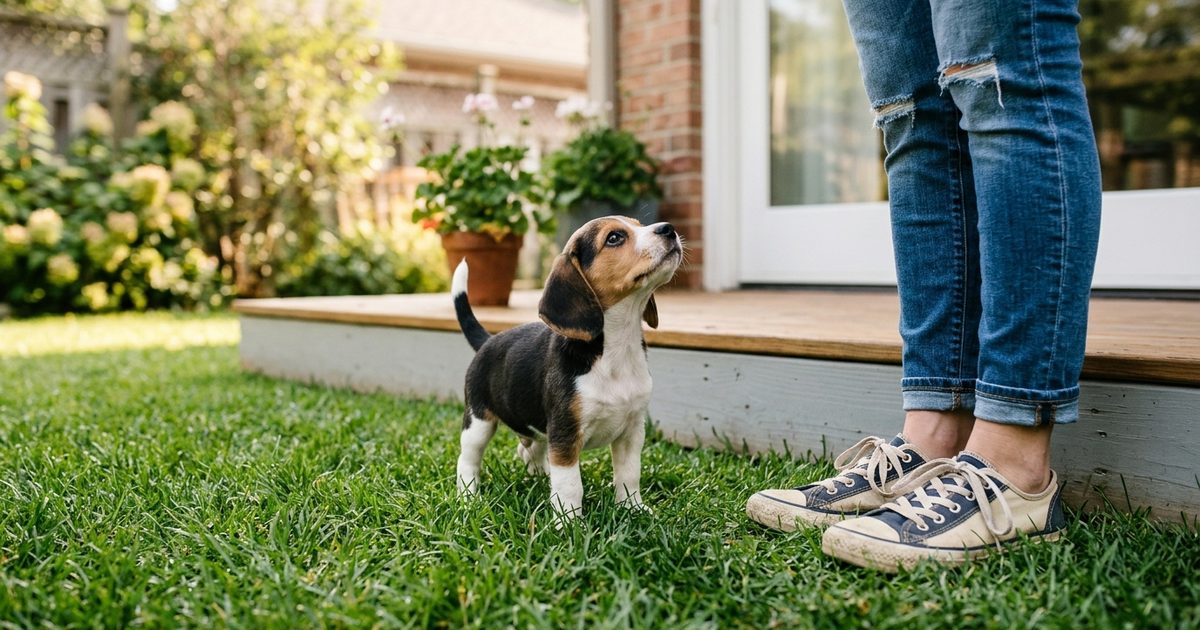
Training only at home. A skill learned in the kitchen is not yet a skill in the park. Practice in new places once it is solid indoors.
Stopping at four months. Adolescence brings new challenges. Keep sessions going through the first year, as our 6 to 12 month puppy training guide explains.
When to ask a professional
Contact a qualified force-free trainer if you feel stuck for more than a couple of weeks on the same problem, or if daily life has become hard to manage. Contact a veterinary behaviorist or certified behavior consultant if your puppy shows fear that does not settle, growls or snaps when handled, or guards food and toys. Speak to your vet about any sudden change in behavior, because pain and illness can look like training problems.
Sources
Guidance checked on September 27, 2026: